Rock cutting & excavation
Water jetting systems for rock cutting and excavation
High pressure water jetting that cuts and fractures rock with less vibration and noise than drilling or blasting, for mining, tunnelling, trenching and foundation work.
- 15–200 LPM
- Electric, diesel or hydraulic
- Skid, trailer or vehicle mounted
- Rotary and fixed nozzles
- Pressure-tested before dispatch
- Spares and accessories in Chennai
- Supplied across India and the Gulf
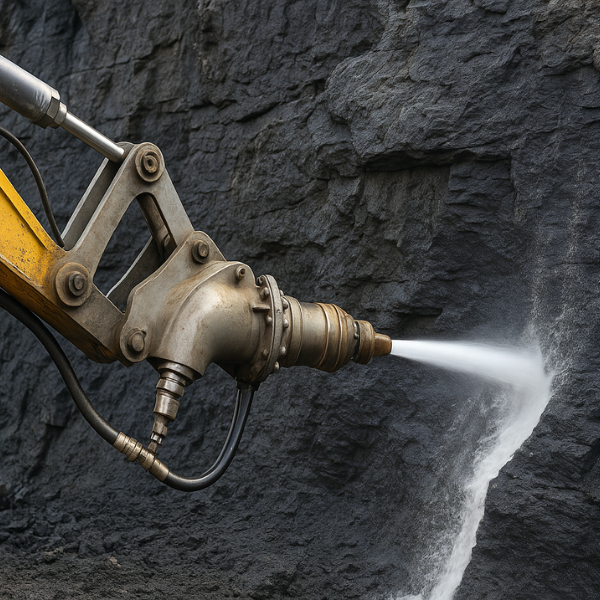
Water jetting systems for rock cutting and excavation utilize high-pressure water streams (up to 2800 bar) to cut, fracture, and excavate rock materials. These systems provide an effective, non-abrasive, and eco-friendly solution for challenging excavation and mining tasks, including rock cutting, trenching, and material removal. Water jetting technology is used in various industries such as mining, construction, tunneling, and geotechnical drilling.
By applying high-pressure water, our water jetting systems break down and fracture rock formations while reducing vibration, noise, and environmental impact compared to traditional excavation methods like drilling, blasting, or mechanical cutting.
How water jetting cuts and fractures rock
Water jetting systems for rock cutting use high-pressure water to fracture and cut through hard rock. The key components of the system include:
Main components of the system
High-Pressure Pump: Delivers water at the required pressure (typically 500 bar to 2800 bar) for effective cutting and excavation
Nozzles: Rotary or fixed nozzles direct the high-pressure water to fracture and cut rock, creating precise and controlled excavation
Flexible Lances & Hoses: Reach deep into rock formations, tunnels, and confined spaces to ensure thorough cutting
Control System: Adjusts water pressure and flow rate to optimize performance based on rock hardness and excavation requirements
Water Recovery System (Optional): Collects used water for filtration and recycling, reducing waste and ensuring compliance with environmental standards
Technical specifications
- Pressure Range: 500 – 2800 bar (customizable for specific cutting and excavation needs)
- Flow Rate: 15 – 200 LPM
- Power Source: Electric, Diesel, or Hydraulic-powered
- Pump Type: Triplex plunger pumps or axial piston pumps
- Nozzle Types: Rotary nozzles, fixed nozzles, and specialized nozzles for rock cutting and fracturing
- Mounting Options: Skid, Trailer, or Vehicle-mounted for portability and ease of access
- Water Recovery Systems: Optional systems for collecting, filtering, and reusing water for sustainability
- Control Systems: Manual or fully automated control for precise regulation of water pressure and flow
Where rock cutting water jetting is used
-
Mining & QuarryingCuts through rock formations, fractures ores, and removes waste materials in mining and quarry operations
-
Tunneling & Underground ConstructionCreates tunnels and shafts by cutting rock and soil without the need for explosives or heavy machinery
-
TrenchingExcavates trenches for utilities, pipelines, and other infrastructure projects with minimal disturbance to the surrounding environment
-
Rock Blasting AlternativesProvides an explosion-free solution for rock excavation, reducing the risks associated with blasting in urban areas
-
Foundation ExcavationCuts rock and hard soil layers for foundation work in construction projects
-
Geotechnical DrillingDrills into rock formations for geotechnical investigations, environmental sampling, and well installations
-
Concrete & Asphalt RemovalEfficiently removes concrete and asphalt surfaces in road work and demolition projects
Why choose water jetting over drilling or blasting
-
Non-DamagingCuts and fractures rock without causing damage to surrounding surfaces, minimizing the risk of collateral damage
-
Eco-Friendly & SustainableEliminates the need for explosives and chemical additives, reducing environmental impact
-
PrecisionHigh-pressure water allows for precise cuts and controlled excavation, ensuring accuracy in difficult terrain
-
Reduced Noise & VibrationMinimizes noise pollution and vibrations, making it suitable for urban areas and sensitive environments
-
Cost-EffectiveReduces the need for heavy machinery, explosives, and additional labor costs, lowering overall project expenses
-
Improved SafetyRemote-controlled systems provide safer working conditions, especially in high-risk or hard-to-reach areas
What Riggers Pumps builds for excavation work
Our water jetting systems are designed for high performance in rock cutting and excavation tasks, offering a range of benefits:

-
High-Performance DesignProvides powerful cutting ability for hard rock and challenging materials
-
Durable ConstructionBuilt with high-quality, corrosion-resistant materials to withstand harsh environments
-
Customizable SolutionsTailored systems based on pressure, flow, and nozzle configuration to meet specific excavation needs
-
Portability & FlexibilityAvailable in skid, trailer, or vehicle-mounted models for easy deployment across different work sites
-
Comprehensive SupportWe provide installation, training, and after-sales service to ensure the optimal performance of your system
Selecting pressure and flow for rock cutting
No single setting suits every rock face. These are the points we work through with you before recommending a pump, nozzle and mounting.
Rock type and structure
Hardness, layering and existing fractures decide how much pressure is needed. Softer or fractured rock needs less than solid, hard formations.
Cutting depth and job type
Trenching, tunnelling, foundation work and concrete or asphalt removal each need a different balance of pressure, flow and nozzle movement.
Flow rate
Systems are built in the 15–200 LPM range. Higher flow removes cut material faster; higher pressure cuts harder material.
Nozzle choice
Rotary nozzles cover an area evenly, while fixed and specialised nozzles concentrate the jet for controlled cuts and fracturing.
Power source and mounting
Electric suits sites with stable power; diesel or hydraulic drive suits remote sites. Skid, trailer or vehicle mounting depends on how often the unit moves.
Water supply and recovery
Tell us your water source and whether water must be collected, filtered and reused on site, so the optional recovery system can be sized.
How a Riggers Pumps order works
Three steps from enquiry to a tested machine on your site.
-
Share the job
Tell us the application, the pressure and flow you need (or the surface and dirt you are dealing with), power available and site conditions. Photos help.
-
We size and build
Our engineers match pump, drive, nozzle and accessories to the duty and send a clear technical offer.
-
Tested, delivered, supported
Each unit is pressure-tested before dispatch, and we stay on call for commissioning guidance, spares and service.
Frequently asked questions
Straight answers to what buyers ask us most. Can’t find yours? Ask our team.
Which water jetting system is suitable for rock cutting and excavation?
The right system is the one matched to your rock and site: correct pressure, flow rate, nozzle setup and mounting. Rock condition, cutting depth and access decide the configuration. Riggers Pumps builds skid, trailer and vehicle-mounted units with triplex plunger pumps, so share the rock type, job and site details and we will recommend a setup.
What pressure range is suitable for rock cutting?
Pressure depends on rock hardness, cutting depth and the type of excavation. Lighter cutting and surface removal work at the lower end of the range, while hard rock and deeper cuts need higher-pressure systems. Flow matters too, because it carries cut material away. We size both together once we know the rock and the job.
Can water jetting replace blasting?
In many jobs, yes. Water jetting is used as a non-explosive alternative where controlled cutting and low vibration matter, such as urban sites, foundations near existing structures and tunnels. Whether it can fully replace blasting depends on rock type, volume to be removed and site conditions, which we review before recommending a system.
Can water jetting cut all types of rock?
Water jetting works on many rock and hard-material applications, but results vary. Effectiveness depends on rock hardness, structure and fracture characteristics, along with the pressure, flow and nozzle design used. For very hard or massive rock, expect slower progress or a higher-pressure setup. A trial or detailed site description helps confirm suitability.
Which system suits trenching and tunnelling work?
For trenching, a skid or trailer-mounted unit with controlled nozzles and flexible hoses suits precise cuts with little disturbance to surrounding ground. For tunnelling and underground work, an electric or hydraulic-driven unit with a flexible lance arrangement and controlled pressure is preferred, because it gives safer operation and lower vibration in confined spaces.
Is an electric or diesel water jetting system better for rock cutting?
Choose electric where a stable power supply is available, such as fixed tunnelling or plant sites; it is quieter and simpler to run indoors or underground. Choose diesel for outdoor, remote and mobile excavation work where the unit must run independently. Hydraulic drive is also available where a suitable hydraulic power source exists on site.
Can water jetting be used for concrete and asphalt removal?
Yes. Water jetting removes concrete and asphalt in road work and demolition when the system is selected correctly for the material, thickness and job condition. It removes material without the impact of breakers, which reduces vibration on surrounding structures. Tell us the area, depth to remove and site access for a suitable recommendation.
What details should I share to get a quote?
Send the rock or material type, the job (trenching, tunnelling, foundation, concrete removal), expected cutting depth, preferred power source (electric, diesel or hydraulic), mounting needs, water availability and whether water recovery is required. Photos or a short site description help. With these, Riggers Pumps can recommend pressure, flow, nozzles and a suitable configuration.
What safety measures apply to high pressure rock cutting?
High pressure jets can cause serious injury, so operators need training, protective equipment and a clear exclusion zone. Use correctly rated hoses, lances and fittings, and check them before each shift. Remote-controlled operation keeps people away from the cutting face in high-risk or hard-to-reach areas. We provide training and guidance with our systems.
Related pumps and applications
Talk to an engineer
Plan your rock cutting job with us
Send the rock type, cutting depth, site access and power source. We will recommend a jetting system with the right pressure, flow and nozzles.
- Call or WhatsApp+91 94870 87778
- Emailconnect@riggerspumps.com
- WorksAmbattur Industrial Estate, Chennai 600 098