Railway Wagon Cleaning Equipment & System
Riggers Pumps is one of India’s most trusted manufacturers and suppliers of Railway Wagon Cleaning Equipment and Systems. Our advanced cleaning solutions are engineered to meet the growing need for automated, efficient, and eco-friendly wagon cleaning across multiple industrial sectors.Each wagon cleaning system is designed to recover valuable materials, reduce manual labor, and extend the life of rail assets, ensuring maximum return on investment (ROI) for railway operators and industrial clients.We provide complete solutions — from Automatic Wagon Washing Machines to High Pressure Plunger Pump Systems — built to handle the toughest cleaning challenges in coal, cement, steel, and power plants.
Overview of the Railway Wagon Cleaning System
A Railway Wagon Cleaning System plays a vital role in maintaining the operational integrity of train wagons used for bulk material transport. Over time, wagons accumulate dust, coal, ore, cement residue, and other contaminants that can affect efficiency and safety.
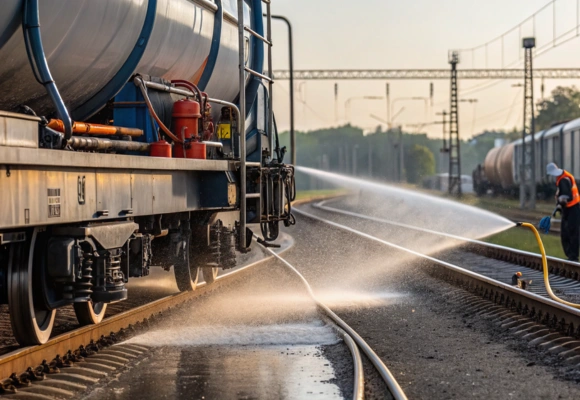
Our Train Wagon Cleaning Equipment utilizes high-pressure jets and automated rotating nozzles to clean both the internal and external surfaces of wagons with precision. The system ensures:
- Complete removal of debris and residues from wagon interiors
- uniform high-pressure washing for consistent cleaning results
- Fast turnaround times for improved logistics
- Low water consumption through recirculation and filtration technology
Riggers’ Automatic Wagon Cleaning Systems can be customized for different wagon types, including open and closed freight wagons, ensuring compatibility with industrial railcar fleets of all sizes.
Importance of Regular Wagon Cleaning
Maintaining a clean wagon fleet isn’t just about appearance — it’s crucial for safety, efficiency, compliance, and asset longevity. Here’s why:
Safety and Reliability
Unclean wagons can cause cargo contamination, track debris, and even mechanical failures. Our railway cleaning equipment removes hazardous residues, preventing derailments and reducing workplace risks for operating staff.
Regulatory Compliance
Industries like food processing, chemical manufacturing, and pharmaceutical transport have strict hygiene and contamination standards. Clean wagons ensure compliance with safety and environmental regulations, avoiding costly penalties or downtime.
Preventive Maintenance
Accumulated materials such as coal dust or cement residue can corrode wagon surfaces and block moving parts. High Pressure Wagon Washing Systems prevent corrosion and rust formation, significantly extending wagon service life.
Operational Efficiency
Clean wagons improve loading and unloading speed, reduce residual material losses, and support on-time logistics operations, which directly enhances plant productivity and profitability.
Advantages of Riggers Train Wagon Cleaning Equipment
Reduces Raw Material Wastage: Efficient cleaning allows valuable materials like coal or iron ore to be recovered, cutting down on waste and improving ROI.
Dust-Free Environment: The system minimizes dust exposure for workers and reduces air pollution within plant premises.
Energy and Water Efficient: Designed with recycling filtration systems, it conserves water while maintaining high cleaning performance.
Longer Equipment Life: Regular use reduces corrosion, mechanical strain, and abrasive wear, prolonging wagon lifespan.
Automated Operation: Reduces manual intervention, ensuring consistent performance and improved worker safety.
Adaptable Design: Compatible with trolley-mounted or track-fixed configurations for various plant layouts.
Eco-Friendly Cleaning: Uses pure water or biodegradable solutions, eliminating the need for harsh chemicals.
Applications of Railway Wagon Cleaning Systems
Iron and Steel Plants: Cleaning ore, pellet, and scrap wagons before reloading.
Power Plants: Removing coal dust and ash residues from fuel transport wagons.
Cement Plants: Cleaning clinker and limestone transport wagons efficiently.
Fertilizer and Chemical Units: Maintaining clean surfaces to prevent cross-contamination.
Mining and Bulk Handling Plants: Ensuring optimal hygiene and reduced maintenance downtime.
Materials Commonly Cleaned
Coal – removing fine coal dust deposits after unloading
Cement & Clinkers – clearing hardened residues from wagon surfaces
Iron Ore & Minerals – washing heavy deposits and rust layers
Fly Ash & Alumina – eliminating fine particulates using precision jets
Fertilizer Residues – preventing contamination and material buildup
Why Choose Riggers Pumps for Wagon Cleaning Solutions
Trusted by leading industrial and railway operators across India.
Integrated with high-pressure triplex plunger pumps for powerful cleaning.
Solutions tailored to wagon type, material handled, and plant layout.
Spare parts, maintenance, and operator training included.
Designed for water reuse, reduced energy use, and minimal emissions.
Ensures quick installation, service, and technical support anywhere in India.
FAQs – Railway Wagon Cleaning Equipment & System
What is a railway wagon cleaning system used for?
A railway wagon cleaning system is used to remove coal dust, cement residue, ore deposits, fly ash, fertilizer residue, and other bulk material buildup from wagon interiors and outer surfaces.
How does an automatic wagon washing system work?
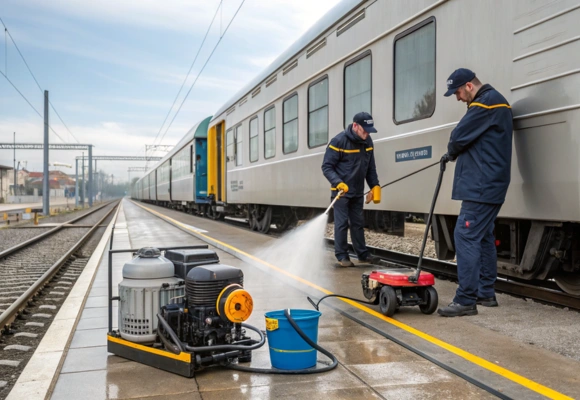
An automatic wagon cleaning equipment setup uses high-pressure water jets, rotating nozzles, and controlled movement to clean wagon surfaces evenly. It helps reduce manual labor and gives faster, more consistent cleaning results.
Can a wagon cleaning system remove coal dust and cement residue?
Yes. A wagon cleaning machine or wagon water jet cleaning system is commonly used to remove coal dust, cement residue, clinker deposits, iron ore buildup, fly ash, and other bulk material contamination from wagons.
Can this system clean both open and closed wagons?
Yes. The railway wagon washing system can be configured for both open freight wagons and closed cargo wagons, depending on wagon design and cleaning requirement.
Which industries use railway wagon cleaning equipment?
Railway wagon cleaning equipment is widely used in iron and steel plants, power plants, cement plants, mining operations, fertilizer units, and chemical industries.
Why is regular wagon cleaning important?
Regular wagon cleaning helps prevent cargo contamination, reduce material loss, improve loading and unloading efficiency, lower maintenance problems, and extend wagon service life. A high pressure wagon cleaning system helps make this process faster and more effective.
Is an automatic wagon cleaning system better than manual cleaning?
Yes. An automatic wagon cleaning equipment system is usually faster, more consistent, safer, and more efficient than manual cleaning, especially for plants handling bulk materials on a daily basis.
Is the system suitable for heavy-duty industrial use?
Yes. Industrial wagon cleaning equipment is designed for continuous industrial operation and is suitable for demanding plant environments where wagons carry heavy bulk materials.
How eco-friendly is a wagon cleaning system?
A wagon cleaning system can be eco-friendly because it can use water recirculation, filtration, and low-chemical cleaning methods to reduce water waste and environmental impact. A high pressure railway cleaning system can also improve cleaning efficiency with controlled water use.
What materials are commonly cleaned from wagons?
Common materials cleaned from wagons include coal, cement, clinker, iron ore, minerals, fly ash, alumina, and fertilizer residue. A train wagon cleaning machine is commonly used for these bulk-cleaning applications.
What maintenance is required for a wagon cleaning system?
Routine maintenance usually includes checking nozzles, filters, pumps, valves, and moving parts, along with regular inspection of the cleaning system for wear and performance.
How do I choose the right railway wagon cleaning system?
Choose the right railway wagon cleaning system based on wagon type, material handled, cleaning frequency, automation level, plant layout, water recycling requirement, and pressure system design. A railway cleaning equipment setup should match your actual wagon size and plant operation.