Water Jetting System for Cement Plants
Water jetting systems for cement plants are essential for maintaining the cleanliness, efficiency, and safety of plant operations. These systems use high-pressure water jets to clean and maintain equipment, remove debris, suppress dust, and ensure the smooth operation of critical machinery like kilns, conveyors, mixers, and cement mills.
Our water jetting systems for cement plants provide eco-friendly, non-abrasive cleaning, offering a cost-effective, safe, and efficient solution for tackling the demanding environments of cement production.
How Water Jetting Systems Work in Cement Plants
Water jetting systems use high-pressure water to remove debris, scale, and dust from plant equipment. Key components of these systems include:
How It Works
High-Pressure Pump: Delivers the required pressure (typically 500 bar to 2800 bar) to clean surfaces effectively
Rotary Nozzles: Spin to distribute water evenly across large surfaces, removing contaminants
Flexible Hoses & Lances: Reach deep into difficult-to-access areas, such as inside pipes, kiln tubes, and ducts
Control System: Provides precise control over water flow and pressure, ensuring optimal cleaning results
Water Recovery Systems (Optional): Collect and filter used water for reuse, promoting sustainability and minimizing water waste
Technical Specifications
- Pressure Range: 500 – 2800 bar (customized for various plant equipment)
- Flow Rate: 15 – 200 LPM
- Power Sources: Electric, Diesel, or Hydraulic-powered
- Nozzle Types: Rotary nozzles, fixed nozzles, and specialty nozzles for different applications
- Pump Type: Triplex Plunger Pumps, Axial Piston Pumps, or Gear Pumps for durability
- Mounting Options: Skid, Trailer, or Vehicle-mounted for portability
- Water Recovery: Optional systems to collect and filter used water for reuse
- Control Systems: Manual or fully automated systems for easy operation
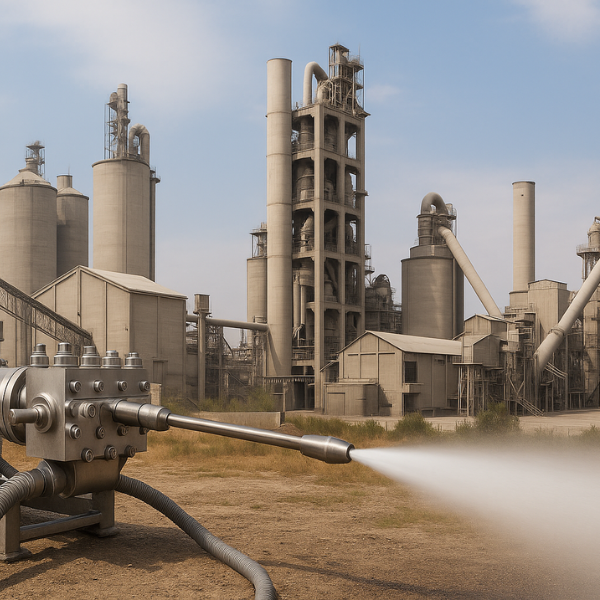
Applications of Water Jetting Systems in Cement Plants
Water jetting systems in cement plants are used for a variety of applications, including:
Dust Suppression: Reduces airborne dust created during material handling and processing, ensuring a cleaner and safer environment
Cement Kiln Cleaning: Removes scale and buildup from cement kilns to improve heat efficiency and prevent obstructions
Cement Mill and Conveyor Cleaning: Cleans conveyors and cement mills from debris, preventing blockages and improving material flow
Surface Preparation: Prepares surfaces of equipment for maintenance, inspections, or repairs
Boiler and Heat Exchanger Cleaning: Removes soot, ash, and other residues, improving heat transfer efficiency
Cooling Tower Cleaning: Ensures the proper functioning of cooling towers by cleaning water intake areas and other critical surfaces
Advantages of Using Water Jetting Systems in Cement Plants
Non-Abrasive Cleaning: Safely removes contaminants without damaging sensitive machinery
Eco-Friendly Dust Control: Reduces dust emissions, improving air quality and worker safety
Improved Equipment Lifespan: Prevents corrosion and wear by regularly cleaning critical machinery
Faster Cleaning: Reduces downtime for cleaning, allowing for quicker maintenance and improved productivity
Cost-Effective: Lower maintenance costs compared to traditional methods like manual cleaning or sandblasting
Customizable Solutions: Tailored systems to meet the specific needs of different areas of the plant
Why Choose Our Water Jetting Systems for Cement Plants?
Our water jetting systems are designed to handle the harsh and demanding conditions of cement plants. Here’s why they stand out:
Durable Construction: Built to withstand the high-pressure and corrosive environments of cement plants
High Efficiency: Delivers powerful cleaning with minimal water consumption, reducing operational costs
Reliable Performance: Engineered for continuous operation, ensuring consistent performance over time
Safe & Eco-Friendly: Non-abrasive, water-based cleaning with no harmful chemicals, reducing the environmental impact
Full Support: We provide installation, maintenance, and after-sales support to ensure the optimal performance of the system

FAQs – Water Jetting System for Cement Plants
Which water jetting system is suitable for cement plant cleaning?
A water jetting system with the correct pressure, flow rate, and nozzle setup is suitable for cleaning kilns, mills, conveyors, boilers, and other cement plant equipment.
Which water jetting equipment is suitable for drill rig cleaning?
The pressure range depends on the cleaning job. For lighter cleaning and dust-related washing, lower pressure may be suitable, while harder cement deposits and scale may need higher pressure. In general, water jetting systems for cement plants work in the 500 to 2800 bar range.
Can the same water jetting system be used for dust control and equipment cleaning?
Not always. Dust control and high-pressure cleaning may need different system configurations, nozzle setups, and pressure levels depending on the plant requirement. In cement plants, dust control may also be used on internal roads and vehicle movement areas to stop dust from spreading outside.
Which water jetting system is suitable for cement kiln cleaning?
For kiln cleaning, a high-pressure water jetting system with suitable nozzles and controlled flow is used to remove buildup and improve operating efficiency.
Which water jetting system is suitable for cement mill and conveyor cleaning?
For mills and conveyors, a system with the right pressure and flow is used to remove dust, debris, and material buildup that can affect movement and plant efficiency.
Which is better for cement plants: electric or diesel water jetting system?
An electric system is suitable where stable power is available. A diesel system is better for outdoor, mobile, or remote cleaning work inside larger cement plant areas.
Are skid-mounted or trailer-mounted water jetting systems better for cement plants?
Skid-mounted systems are better for fixed plant use, while trailer-mounted systems are better when the unit needs to move between different cleaning locations.
Can water jetting damage cement plant equipment?
When the correct pressure, nozzle, and operating method are selected, water jetting can clean effectively without unnecessary surface damage.
How often should water jetting be used in a cement plant?
Water jetting should be done as part of routine maintenance, especially in areas where dust, scale, and deposits build up regularly.
How do I choose the right water jetting system for a cement plant?
Choose the system based on the cleaning application, pressure range, flow rate, power source, mounting type, and the type of buildup that needs to be removed.