High-Pressure Drone Solar Panel Cleaning System
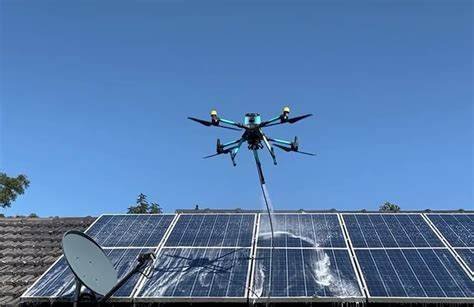
Maximize solar output and ROI with a smarter cleaning approach. Traditional methods—manual labor, scaffolding, or fixed robots—struggle with large-scale arrays, safety concerns, and water usage. Our High-Pressure Drone Solar Panel Cleaning System transforms maintenance into a safe, efficient, and eco-conscious operation.
Why Clean Solar Panels?
Efficiency = Profitability: Even a 2–3% drop in cleanliness reduces power output significantly. Routine cleaning restores optimal performance and accelerates return on investment.
Access Challenges: From rooftop arrays to floating installations, many systems are hard to reach. Drones navigate these areas without risk to technicians or equipment.
Environmental Impact: In dry regions or areas with water restrictions, drones use up to 60% less water compared to traditional methods—no chemical runoff, no compromise.
Manual Labor = Risk: High rooftops and vast arrays increase fall risk and injury potential. Drone automation keeps people safe and reduces crew size.
How High Pressure Washers Work for Blinds & Awnings
Our high pressure washers for blinds and awnings come equipped with adjustable pressure settings, making them suitable for a wide variety of materials, including canvas, vinyl, and metal.
Process Overview:
Site Mapping & AI Planning
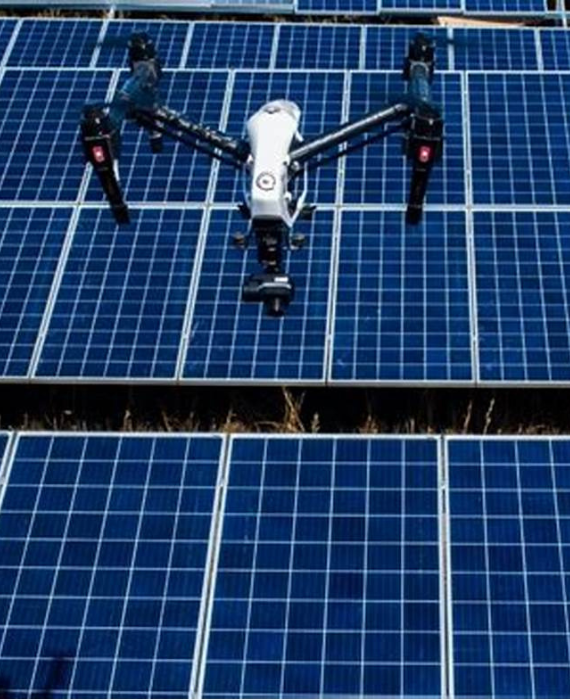
Drones scan your array using photogrammetry or LiDAR, identifying soiled zones and mapping optimal cleaning paths.
Autonomous Jet Cleaning
Real-Time Visual Monitoring
Final Inspection & Reporting
Features
Flight Control: GPS precision with obstacle avoidance & fail-safe auto-return
Jet Nozzle: 50–100 bar pressure; 5–8 L/min; safe for panel glass & frames
Quick-Swap Modules: 10L tank (12 min clean), 25-min flight time batteries
Smart Camera: 12MP RGB + optional IR for micro-crack & soiling detection
Adaptive AI: Identifies dirty spots, adjusts spray intensity, and conserves battery
Applications
Utility-Scale Farms
Clean 100-acre arrays without stepping on the field.
Commercial Rooftops
Access tall buildings without disrupting tenants.
Floating Solar
Safe over water—no need for boats or wet crews.
Agrivoltaics
No trampling crops or disturbing livestock.
Distributed C&I Sites
One drone, multiple rooftops = zero setup fuss.
Technical Specifications
These are the main parts that define the performance and reliability of our vehicle washing pumps and machines:
| Component | Brands / Materials | Function |
|---|---|---|
| Motors / Diesel Engines | Crompton Greaves, Marathon, Havells, Kirloskar, Siemens, ABB | Primary power source, available in electric or diesel-driven models. |
| Triplex Pump | Annovi Reverberi, Boutoloni, Hawk, CAT Pump, PFNL | Generates high-pressure water for effective vehicle cleaning. |
| Feed / Auxiliary Pump | OEM / Custom | Maintains steady water flow when the inlet supply is inconsistent. |
| Electrical Panel | Industrial Grade | Provides control and electrical safety for operations. |
| Hydraulic Tubes | Reinforced, high-strength material | Transfers water safely under high pressure. |
| Base Frame | Mild Steel / Heavy-duty Fabrication | Ensures stable, vibration-free system support. |
| Mounting Options | Trolley-mounted, Skid-mounted, Truck-mounted | Flexible setups for garages, fleets, and industrial use. |
Why Choose Us
- Over five years of R&D in autonomous drone cleaning technologies tailored for solar O&M.
- In-house team of engineers specializing in flight-control algorithms, fluid dynamics, and solar asset management.
- We assess your specific panel type (glass, frameless, bifacial) and local environmental conditions (dust load, bird activity) to calibrate pressure settings and nozzle configurations.
- Modular attachments—such as UV-sterilization heads or anti-corrosion spray modules—address unique site requirements.
- On-site operator training covering drone piloting, safety protocols, and regulatory compliance.
- 24/7 remote monitoring, software updates, and preventive-maintenance recommendations ensure uninterrupted operations.
- All drones are DGCA-approved, carry valid PMLA (Permission for Movement of Light Drones) certificates, and meet local CCTV and environmental norms.
- Cleaning solutions comply with CPCB (Central Pollution Control Board) standards and are biodegradable, ensuring zero negative impact on soil and waterways.
- Post-cleaning reports include high-resolution inspection images, panel-level performance indicators, and water usage logs—enabling predictive maintenance and O&M budgeting.
- Integration with SCADA or O&M platforms for seamless data transfer and analytics.
FAQs – Drone Solar Panel Cleaning
Is drone solar panel cleaning safe for solar panels?
Yes. Drone solar panel cleaning is safe when the pressure, spray angle, and nozzle distance are controlled properly. This helps remove dust and dirt without damaging panel glass, frames, or coatings.
How does a drone for solar panel cleaning work?
A drone for solar panel cleaning follows a planned flight path and sprays water evenly across the panel surface. The system controls pressure, flow, and distance so cleaning is effective and consistent.
Can a solar panel cleaning drone be used on large solar farms?
Yes. A solar panel cleaning drone is useful for large solar farms because it can cover wide panel areas faster and with less manual effort than traditional methods.
Can drones be used to clean rooftop solar panels?
Yes. Drones for cleaning solar panels are especially useful on rooftops where manual access is difficult or risky. They can clean elevated systems without scaffolding or large cleaning crews.
How much water is used when cleaning solar panels with drones?
Cleaning solar panels with drones usually uses less water than many traditional cleaning methods because the spray is controlled more precisely. Actual water use depends on site size, dirt level, and operating settings.
Is a drone solar panel cleaner better than manual cleaning?
In many cases, yes. A drone solar panel cleaner can reduce labor, improve safety, and make cleaning easier on large or hard-to-reach installations.
What pressure is used for solar panel cleaning with drones?
Most systems use controlled pressure in the 50–100 bar range, depending on panel condition and cleaning requirements. The pressure is adjusted to clean effectively while staying safe for the panel surface.
Can drone-based solar panel cleaning be used in dusty areas?
Yes. Drone-based solar panel cleaning is especially useful in dry and dusty regions where solar panels lose performance quickly due to dust buildup.
Can a drone be used on floating solar plants or uneven ground-mounted sites?
Yes. A drone can clean floating solar plants and uneven ground-mounted arrays where manual access is difficult, unsafe, or time-consuming.
How often should solar panels be cleaned with a drone?
That depends on dust, pollen, pollution, bird droppings, and local weather. In high-soiling areas, cleaning may be needed monthly or every two months. In cleaner areas, quarterly cleaning may be enough.
Can drone cleaning reduce labor and safety risks?
Yes. It reduces the need for workers to climb roofs, walk across solar fields, or use scaffolding and lifts, which improves safety and lowers manual effort.
Can the drone inspect panels as well as clean them?
Yes. Many systems can also capture images during or after cleaning to verify results and help identify dirty zones or visible issues on the panels.