High Pressure Drone Cleaning System for Facade Cleaning
Keep building façades clean, safe, and visually appealing with our High Pressure Drone Cleaning System—an efficient, safe, and sustainable alternative to traditional labor-intensive methods.
Why Facade Cleaning Matters
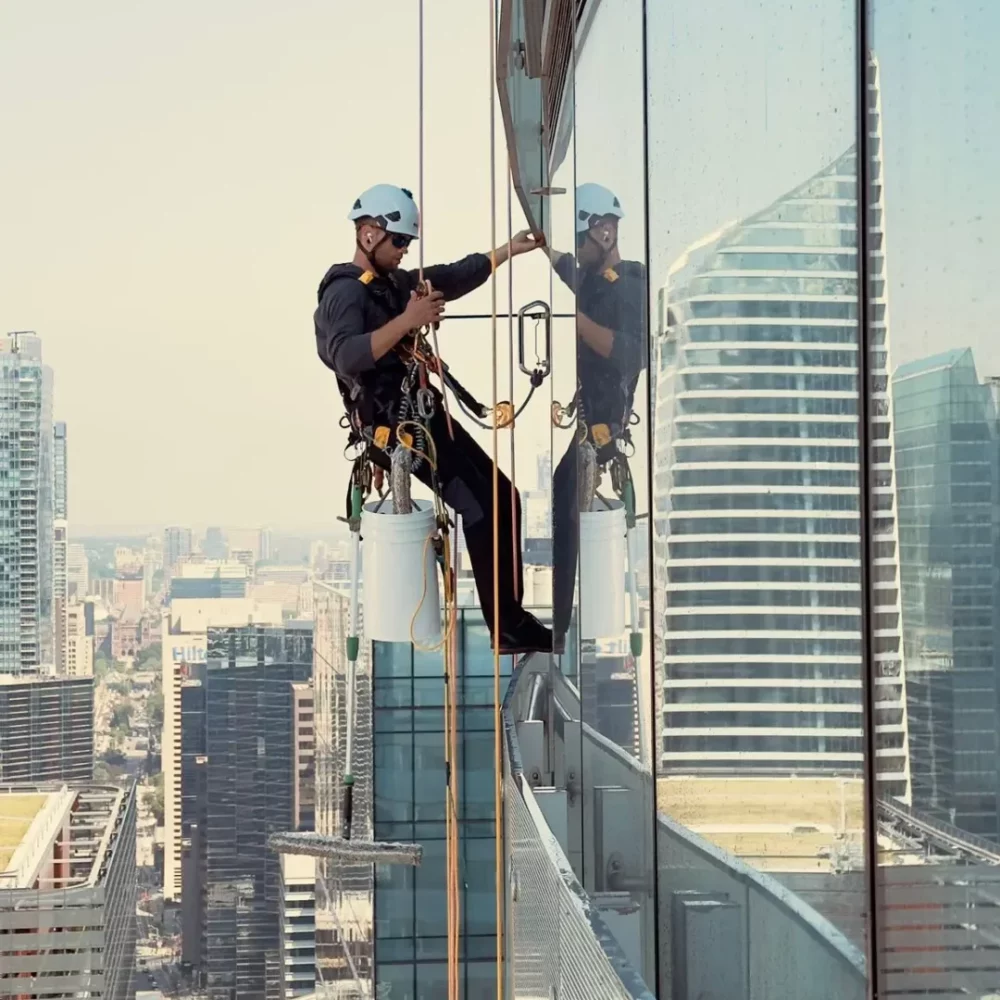
Aesthetic Appeal: A clean exterior enhances curb appeal, protects brand image for commercial properties, and increases tenant satisfaction in residential complexes.
Protective Maintenance: Dirt, mold, pollutants, and biological growth can degrade sealants, stone, metal, and glass over time—leading to costly repairs if left unchecked.
Safety & Compliance: Grime buildup on glass or reflective panels can create glare hazards, while unchecked growth on masonry can lead to structural weakening and safety liabilities.
Environmental Concerns: Traditional methods often use excessive water volumes and harsh chemicals, leading to runoff and environmental impact.
Introducing the High Pressure Drone Cleaning System
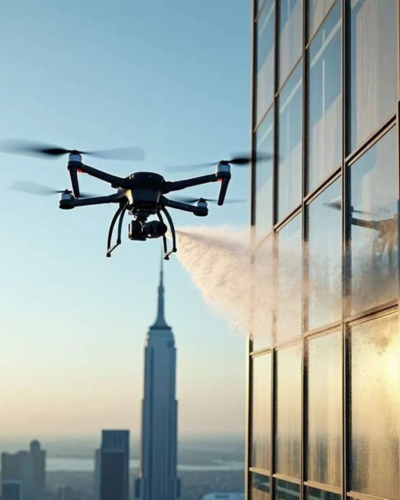
Our drone-based cleaning platform is equipped with intelligent sensors, high-pressure nozzles, and real-time monitoring. Capable of handling glass, stone, metal, and composite materials, it removes stains, grime, biological buildup, and bird droppings—quickly and safely.
How It Works
Initial Survey & Mapping
Flight Path Planning
High-Pressure Jet Cleaning
Real-Time Monitoring & Control
Final Rinse & Inspection
Features
Smart Navigation & Safety: Operates in GPS-denied environments, with lidar, ultrasonic sensors, and wind monitoring.
Versatile Nozzle Pressure:Tailored cleaning from 50 to 180 bar, ideal for everything from delicate heritage stone to heavy urban grime.
Eco-Detergent Integration: Uses ISO 14001-compliant, low-foam biodegradable agents—safe for humans and the environment.
Data & Inspection: MP RGB/IR cameras document every job—supporting façade maintenance logs or insurance needs.
Mobile-Optimized Frame: Under 12 kg and modular for easy transport and setup in under 30 minutes.
Applications
Glass Curtain Walls
Office towers, shopping malls, and hotels with extensive glazed exteriors.
Stone & Masonry Cladding
Heritage buildings, civic structures, and premium residential complexes requiring gentle cleaning to preserve stone integrity.
Metal & Composite Panels
Aluminum, steel, and composite façades susceptible to urban pollution and salt spray in coastal areas.
Reflective & Tinted Glass
Specialized pressure settings protect delicate coatings and prevent micro-scratches.
Solar Façade Panels
Dust and bird droppings on photovoltaic-integrated façades reduce energy yield—our system restores panel efficiency without risking electrical components.
Technical Specifications
| Parameter | Specification |
|---|---|
| Drone Frame Weight | 11.5 kg (carbon-fiber frame) |
| Battery Duration | 25 minutes (max payload) |
| Water Module Capacity | 10 liters (quick-swap design) |
| Nozzle Pressure Range | 50 – 100 bar (adjustable) |
| Flow Rate | 8 – 12 L/min (optimized) |
| Detergent Injection Raten | 0.5 – 1 L/min (biodegradable) |
| Max Operating Wind Speed | 15 km/h (auto-hover freeze ≥ 12 km/h) |
| Control Range | 1 km line-of-sight; 300 m GPS-denied mode |
| Camera Resolution | 12 MP HD RGB + optional IR |
| Obstacle Detection | Lidar & Ultrasonic (3 m range) |
Why Choose Us
- Over five years of R&D in autonomous cleaning drones tailored for façade maintenance.
- Deep understanding of fluid dynamics, flight-control algorithms, and façade materials ensures optimal performance and safety.
- Pressure settings, nozzle geometry, and detergent formulas are customized to your building’s cladding type—be it glass, stone, metal, or composite.
- Optional add-ons include UV-sterilization heads, anti-fungal spray modules, and corrosion-inhibitor injectors for specialized environments.
- On-site operator training covering mission planning, drone safety protocols, and regulatory compliance.
- 24/7 remote support, software updates, and preventive-maintenance checklists keep your system performing reliably year-round.
- All drones are DGCA-approved with required PMA certifications and restricted-area operation clearances.
- Cleaning agents meet CPCB norms and ISO 14001 environmental standards for safe disposal and minimal ecological impact.
- Triple-redundant inertial sensors, dual-redundant pressure pumps, and geofencing protocols prevent single-point failures and unauthorized flight paths.
- Emergency-landing algorithms guide the drone to predetermined safe zones if battery levels drop or communication is interrupted.
FAQ
What is a High Pressure Cladding Cleaning Drone System and how does it work?
A High Pressure Cladding Cleaning Drone System uses a drone-mounted cleaning setup to remove dirt, pollution, bird droppings, and surface buildup from exterior cladding on high-rise buildings. It is designed to improve access, reduce manual risk, and speed up facade maintenance.
When should I choose an Elevation Surface Cleaning Drone System for my building?
An Elevation Surface Cleaning Drone System is a good option when exterior surfaces are difficult to access using traditional methods such as scaffolding or rope access. It is commonly used for high-rise towers, commercial properties, and buildings with large facade areas.
What is a Drone Based Building Envelope Washing System used for?
A Drone Based Building Envelope Washing System is used to clean the outer shell of a building, including glass, cladding, metal panels, and other exposed facade materials. It helps maintain appearance and reduces buildup that can affect long-term surface condition.
Is a High Pressure Glazing Cleaning System safe for glass facades?
Yes, a High Pressure Glazing Cleaning System can be safe for glass facades when the pressure, spray angle, and distance are adjusted correctly. Surface condition, coating type, and sealant health should always be assessed before cleaning begins.
How effective is an Exterior Cladding Pressure Cleaning Drone on high-rise buildings?
An Exterior Cladding Pressure Cleaning Drone can be highly effective for removing light to moderate grime, dust, pollutants, and biological buildup from exterior wall systems. Performance depends on the material type, contamination level, and weather conditions.
Can an ACP Panel Cleaning Drone System clean aluminum composite panel facades without damage?
Yes, an ACP Panel Cleaning Drone System can be used on aluminum composite panel facades when the cleaning pressure and nozzle settings are matched to the panel finish and condition. A pre-cleaning assessment is important to avoid damage to coatings or joints.
How does an Exterior Glass Surface Cleaning Drone compare with traditional cleaning methods?
An Exterior Glass Surface Cleaning Drone can reduce setup time and improve access on many projects compared with traditional methods. However, the right method depends on building height, facade complexity, site restrictions, and local safety requirements.
Can an Aluminum Cladding Cleaning Drone remove pollution stains and dirt buildup?
Yes, an Aluminum Cladding Cleaning Drone can remove common surface contaminants such as dust, urban grime, bird droppings, and pollution residue. Deep staining or damaged coatings may require specialist restoration instead of standard cleaning.
Is a Stone Surface Cleaning Drone System suitable for delicate or heritage buildings?
A Stone Surface Cleaning Drone System can be suitable for selected stone and masonry facades, but only after careful review of the surface condition. Delicate stone, aged mortar, and decorative details may need lower pressure or an alternative cleaning method.
What makes an Architectural Glass Cleaning Drone a good choice for premium buildings?
An Architectural Glass Cleaning Drone is a strong choice for premium buildings because it can help clean large glazed surfaces efficiently while supporting a more controlled and less disruptive exterior maintenance process. It is often used where appearance and regular upkeep are important.
How often should exterior surfaces be cleaned using a drone cleaning system?
Cleaning frequency depends on the building location, surface material, pollution exposure, weather, and image standards of the property. Many buildings benefit from annual or semi-annual cleaning, while coastal or high-pollution sites may need more frequent service.
Does drone facade cleaning work in all weather conditions?
No. Drone cleaning should only be carried out within safe weather limits. Wind, rain, visibility, and building turbulence can affect both cleaning quality and flight safety.
How do you prevent water runoff and overspray during facade cleaning?
A professional cleaning provider should plan water control before the job starts. This may include controlled spray settings, runoff management, collection systems, and site-specific environmental precautions.
What should I check before hiring a drone facade cleaning company?
Look for operator experience, safety procedures, insurance, material-specific cleaning knowledge, and a clear process for assessing glass, cladding, stone, and panel surfaces before work begins.