Bridge maintenance
Water jetting systems for bridge cleaning and surface preparation
Trailer or vehicle-mounted jetting units that clean decks, beams, supports and undersides of steel and concrete bridges, removing moss, algae, rust and pollution before inspection, repair or recoating.
- 500–2800 bar
- Hoses up to 100 m
- Trailer or vehicle mounted
- Steel and concrete bridges
- Pressure-tested before dispatch
- Spares and accessories in Chennai
- Supplied across India and the Gulf
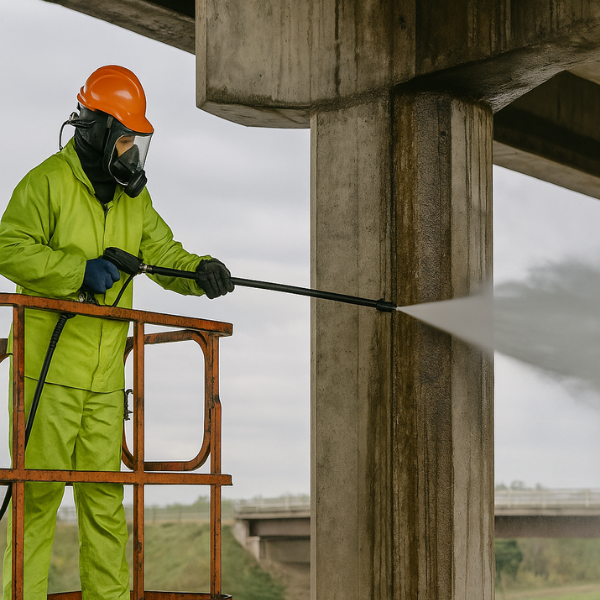
Water jetting systems for bridge cleaning offer high-efficiency, non-abrasive cleaning solutions for maintaining the structural integrity and appearance of bridges. These systems utilize high-pressure water jets (up to 2800 bar) to remove dirt, moss, algae, rust, grease, and pollution deposits from bridge surfaces, supporting safer inspection and longer service life. Whether for steel bridges, concrete bridges, or pedestrian bridges, our water jetting systems provide an eco-friendly alternative to chemical-based cleaning methods.
Bridge cleaning is crucial for structural maintenance, safety inspections, and preserving aesthetics, and our systems are designed to meet the specific cleaning needs of different bridge types.
How bridge jetting works
Water jetting systems for bridge cleaning use high-pressure water streams to remove contaminants without the need for abrasives or chemicals. The basic components include:
System components
High-Pressure Pump: Generates the necessary pressure (typically from 500 to 2800 bar) for cleaning
Rotary Nozzles: Spin and cover a larger area, making cleaning more efficient
Flexible Lances & Hoses: Reach difficult areas such as bridge undersides, supports, and beams
Control System: Ensures precise regulation of water pressure and flow, adapting to different cleaning needs
Remote Operation: Allows for safe operation in high or hard-to-reach areas, minimizing the risk to workers
Technical Specifications
- Pressure Range: 500 – 2800 bar (customized for bridge surface type and contamination level)
- Flow Rate: 15 – 200 LPM
- Power Source: Electric, Diesel, or Hydraulic-powered
- Pump Type: Triplex plunger pumps or axial piston pumps for high durability
- Nozzle Type: Rotary, fixed, and specialized nozzles for different cleaning applications
- Mounting Options: Skid, Trailer-mounted, or Vehicle-mounted for ease of mobility
- Hose Length: Flexible hoses up to 100 meters
- Control System: Manual, semi-automatic, or fully automated for precise control
Bridge cleaning jobs
-
Concrete Bridge CleaningRemoves dirt, pollution buildup, and surface stains from concrete surfaces
-
Steel Bridge CleaningSafely cleans rust, debris, and contaminants from steel surfaces to prevent corrosion
-
Deck CleaningCleans bridge decks, removing debris, moss, and algae that can accumulate over time
-
Bridge Supports & BeamsEffective for cleaning hard-to-reach areas of bridge supports and beams
-
Surface PreparationPrepares bridge surfaces for repairs or coating applications
-
Environmental RemediationRemoves pollutants and oils that can negatively impact the surrounding environment
Advantages for bridge maintenance crews
-
Non-AbrasiveCleans without grit, and pressure can be set to avoid damaging sound concrete or steel
-
Eco-FriendlyWater-based cleaning solution that eliminates the need for chemicals, protecting the environment
-
Fast & EfficientRemoves contaminants quickly, minimizing downtime and keeping bridges in use
-
Preventive MaintenanceReduces the risk of corrosion and rust buildup, enhancing the longevity of the bridge
-
Safe OperationCan be remotely controlled, allowing workers to clean high or difficult-to-access areas without physical exposure
Why choose Riggers Pumps for bridge work
Our water jetting systems are specifically designed to meet the unique challenges of bridge cleaning, offering a safe and efficient solution. Benefits include:

-
Customizable OptionsTailored systems designed to meet your specific pressure and flow needs
-
DurabilityBuilt with high-quality materials to withstand tough cleaning tasks on bridges and overpasses
-
Portable & FlexibleTrailer or vehicle-mounted systems that can be easily transported to different bridge sites
-
Comprehensive SupportFull installation, training, and after-sales support for optimal performance
-
Cost-EffectiveHigh-efficiency systems that reduce labor and maintenance costs over time
Typical bridge jetting job: step by step
Bridge work is usually done in short traffic or access windows, often over water. Planning the sequence keeps the job safe and efficient.
Define the goal
Routine cleaning of moss, algae and dirt needs lower pressure; rust removal and pre-coating preparation need higher pressure within 500–2800 bar.
Plan access
Vehicle or trailer mounting keeps the unit on the deck; hoses up to 100 m and lances reach undersides, supports and beams.
Choose nozzles
Rotary nozzles for wide coverage on decks and concrete, fixed or specialised nozzles for rust, joints and bearings areas.
Manage water and debris
Plan how wash water, rust and oil residue will be collected, especially where the bridge spans a river or drain.
Operate safely at height
Use remote operation where possible so crews stay clear of the jet in high or hard-to-reach areas.
Inspect or recoat
Clean surfaces make cracks, corrosion and spalling visible for inspectors and give coatings a sound base.
How a Riggers Pumps order works
Three steps from enquiry to a tested machine on your site.
-
Share the job
Tell us the application, the pressure and flow you need (or the surface and dirt you are dealing with), power available and site conditions. Photos help.
-
We size and build
Our engineers match pump, drive, nozzle and accessories to the duty and send a clear technical offer.
-
Tested, delivered, supported
Each unit is pressure-tested before dispatch, and we stay on call for commissioning guidance, spares and service.
Frequently asked questions
Straight answers to what buyers ask us most. Can’t find yours? Ask our team.
Which water jetting system suits bridge cleaning?
A system with the correct pressure, flow, nozzle and hose length for your bridge suits the job. Most bridge contractors choose trailer or vehicle-mounted units with long hoses so the machine stays on the deck while operators reach beams, supports and undersides.
What pressure is suitable for bridge cleaning?
It depends on the surface and contamination. Lower pressures handle dirt, moss and algae; higher pressures within our 500–2800 bar range are used for rust, heavy deposits and surface preparation. Pressure is set to clean without eroding sound concrete or steel.
Can water jetting remove rust from steel bridges?
Yes. With the correct pressure and nozzle, water jetting removes rust, pollution deposits, dirt and build-up from steel members. It is commonly used before recoating because it cleans without leaving grit in joints and crevices. Higher pressure within our range is used where steel must be cleaned back to sound metal.
Is water jetting safe for concrete and steel bridges?
Yes, when pressure, nozzle and operating method are selected correctly. Jetting is non-abrasive, so it can clean without unnecessary damage. Take extra care on weak or cracked concrete, bearings and expansion joints. Trial a small area first to confirm the settings.
Can it clean bridge undersides, supports and beams?
Yes. Flexible hoses up to 100 m, lances and remote operation let crews clean undersides, supports and beams that are hard to reach. Vehicle or trailer mounting keeps the pump on the deck while hoses go over the side. Remote operation helps keep crews clear of the jet when working at height.
Should I choose an electric or diesel system?
Diesel is usually the better choice for bridge work because sites are outdoors, mobile and often remote from power. Electric suits locations with a stable supply nearby, such as a depot or a long-term project with site power. Tell us the bridge locations and we will recommend the drive.
Can jetting be used before bridge repair or coating?
Yes. Water jetting prepares surfaces for repair, recoating or inspection by removing dirt, rust, loose material and contaminants. Higher pressure and suitable nozzles are used for this work compared with routine cleaning. Allow the surface to dry and follow the coating maker's requirements before recoating.
How often should bridges be cleaned?
It depends on traffic, weather, pollution, algae growth and site conditions. Routine cleaning reduces build-up that traps moisture, and it supports better inspection and maintenance planning. Bridges near the sea, industry or heavy traffic often build up dirt and deposits faster. Share the bridge environment and we can suggest a suitable set-up for routine work.
What details should I share for a quote?
Share the bridge type (steel, concrete, pedestrian), areas to clean, contamination, whether it is routine cleaning or surface preparation, hose reach needed, mounting preference and power source. Photos of the bridge and the contamination help us recommend pressure, nozzles and hose lengths for your crew.
Related pumps and applications
Talk to an engineer
Equip your crew for bridge cleaning
Tell us the bridge type, areas to clean, contamination and reach needed. We will propose a mobile jetting set-up.
- Call or WhatsApp+91 94870 87778
- Emailconnect@riggerspumps.com
- WorksAmbattur Industrial Estate, Chennai 600 098