High Pressure Water Jet Machine for Acid Cleaning After Pickling
Riggers Pump specialized in supplying advanced high pressure water jet machines for acid cleaning after pickling. In stainless steel and industrial metal processing, pickling removes scale and oxides, but it leaves behind residual acid film and salts that can cause corrosion if not properly cleaned.
Our acid cleaning after pickling machines are engineered to deliver fast, safe, and environment-friendly cleaning solutions—ensuring metal surfaces are neutralized, contaminant-free, and ready for finishing
Why Acid Cleaning after Pickling is Essential
Prevents corrosion under protective coatings.
Ensures clean and pure stainless steel surfaces for polishing, painting, or passivation.
Reduces contamination risks in industrial and export-grade steel products.
Enhances equipment life, lowers rework costs, and improves efficiency.
With Riggers Pump’s water jet cleaning systems, industries get a reliable and cost-effective solution for safe post-pickling operations.
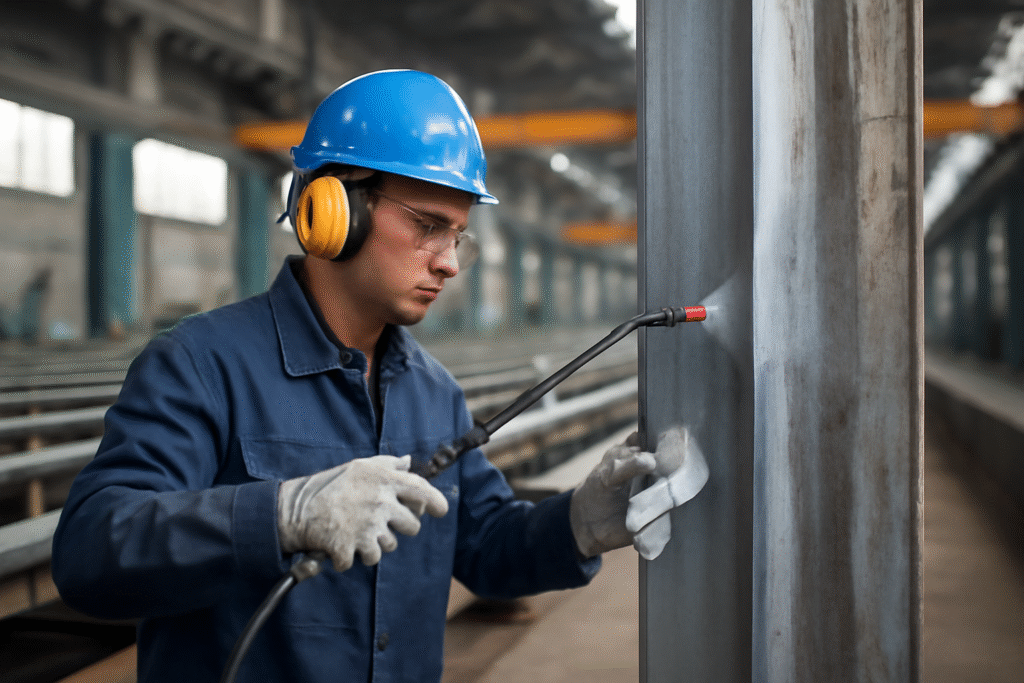
Types of Water Jet Systems for Acid Cleaning
Water jet systems are classified based on operating pressure, flow rate, and system design. Each type offers distinct technical characteristics in terms of jet impact force, pump configuration, and nozzle engineering. Below is a technical overview of the main categories:
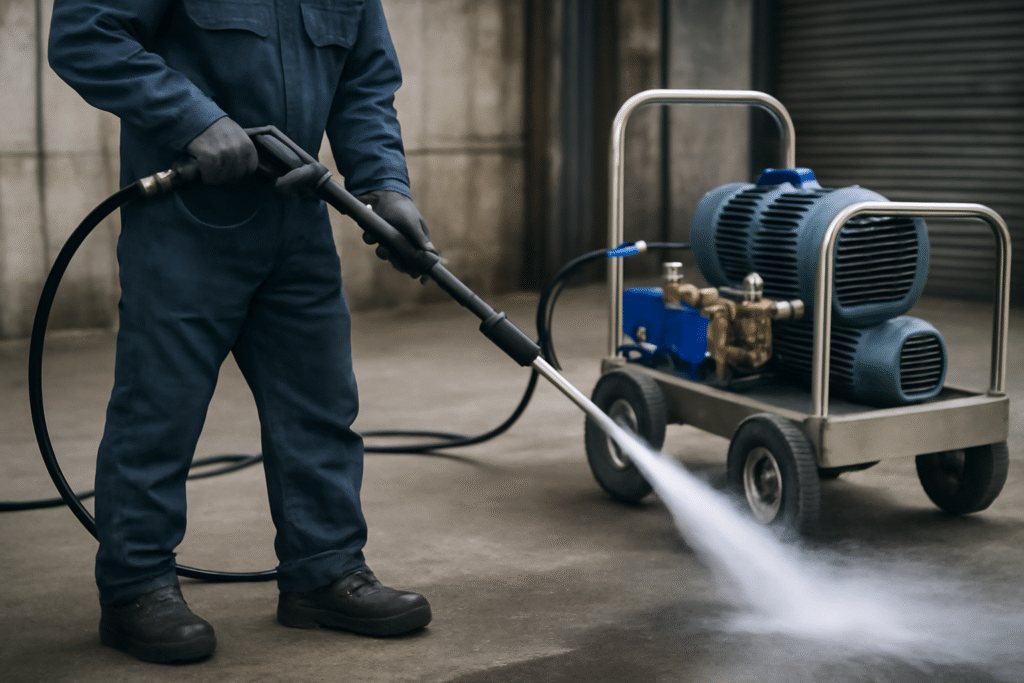
High-Pressure Water Jet Systems (HPWJ)
- Pressure Range: 10,000 – 20,000 PSI
- Flow Characteristics: Medium flow rates, optimized for stable jet impact.
- Design: Generally skid-mounted or portable units with plunger pumps.
- Operation: Produces a concentrated jet stream capable of dislodging acid residues and light scaling through controlled kinetic energy.
- Key Technical Advantage: Balances energy efficiency with cleaning precision, minimizing wear on pump components.
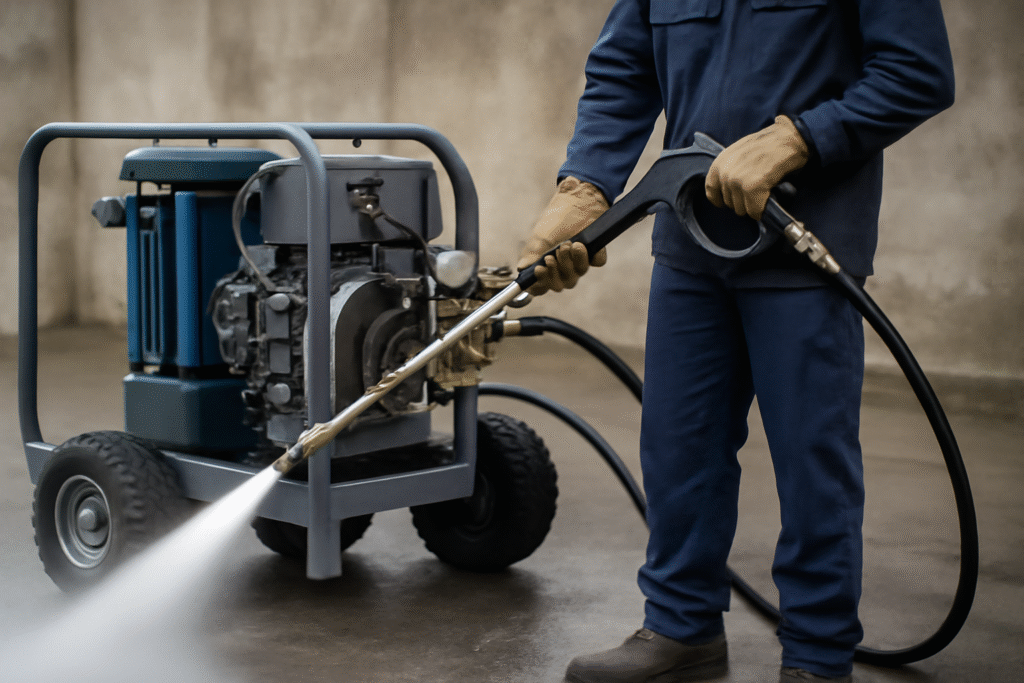
Ultra-High-Pressure Water Jet Systems (UHPWJ)
- Pressure Range: 20,000 – 40,000 PSI
- Flow Characteristics: Lower flow rates compared to HPWJ, but significantly higher impact force.
- Design: Multi-plunger intensifier pumps, reinforced hoses, and precision-engineered nozzles.
- Operation: Uses extreme pressure to create micro-erosive forces that strip acid film and corrosion layers at the molecular level.
- Key Technical Advantage: Provides deep cleaning capability without requiring abrasive media.
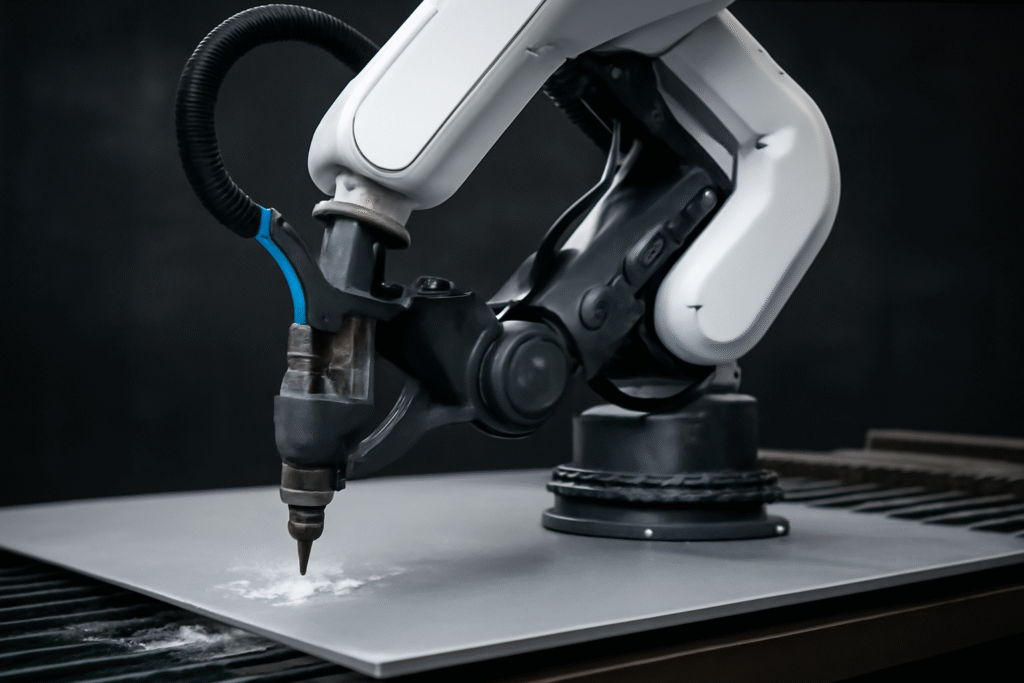
Robotic / Automated Water Jet Systems
- Pressure Range: Configurable (HPWJ or UHPWJ based on requirement).
- Flow Characteristics: Controlled by servo-driven actuators and automated pressure regulators.
- Design: Integrated with CNC/PLC controls, robotic arms, or track-mounted nozzle systems.
- Operation: Delivers consistent jet positioning, angle adjustment, and controlled dwell time for uniform surface treatment.
- Key Technical Advantage: High repeatability, reduced human error, and improved jet efficiency due to automation.
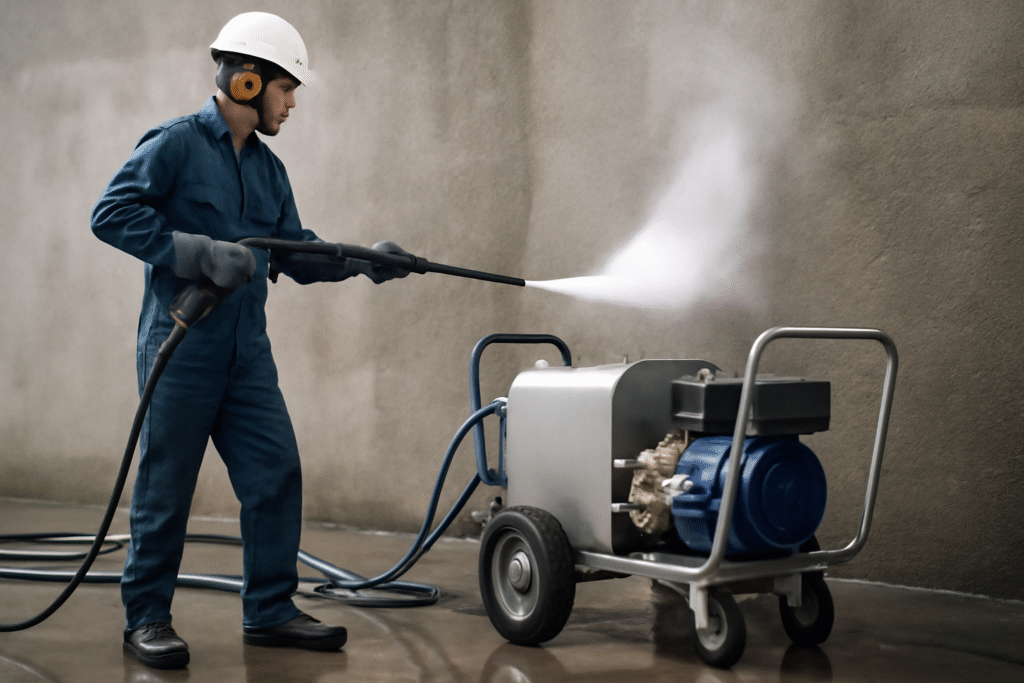
Hydro-Blasting Systems
- Pressure Range: 5,000 – 20,000 PSI (but designed for very high volumes).
- Flow Characteristics: High flow rates with wide coverage patterns.
- Design: Large-capacity pumps with multi-orifice rotating nozzles for 360° spray action.
- Operation: Relies on flow volume and nozzle geometry rather than peak pressure to generate high surface energy.
- Key Technical Advantage: Efficient for large-area rinsing while maintaining uniform flow distribution across surfaces.
Benefits of Riggers Pump’s Water Jet Machines
Complete acid film removal without surface damage.
Eco-friendly – reduces chemical usage and waste disposal.
Cost-effective, lowering maintenance and operational expenses.
Safe & reliable, suitable for stainless steel and industrial metals.
Versatile applications in mills, vessels, reactors, and shipyards.
Applications in Industry
Our high pressure water jet pumps for acid cleaning are widely used in:
Stainless steel rolling mills & pickling lines.
Tube and pipe manufacturing plants.
Refineries, chemical plants, and shipyards.
Heat exchanger, condenser, and storage tank cleaning.
Choosing the Right Acid Cleaning Machine
When selecting a high pressure water jet pump for acid cleaning, consider:
| Criteria | Description |
|---|---|
| Level of Acid Deposits | Light / Medium / Heavy |
| Required Pressure Range | [Insert pressure range, e.g., 1000 PSI - 5000 PSI] |
| Required Flow Capacity | [Insert flow rate, e.g., 10-100 LPM] |
| Type of Equipment | Sheets / Coils / Tanks / Reactors / Other [Specify] |
| Automation Requirements | Manual / Robotic / Semi-Automatic |
| Long-Term Support & Maintenance | Warranty / Spares Availability / Service Contracts |
Why Choose Us?
As leading suppliers of high pressure water jet machines for acid cleaning in India, we bring:
Proven expertise with installations in top steel plants.
A wide range of customized acid cleaning systems.
Eco-friendly, cost-effective water jet solutions.
Strong after-sales service with spares, training, and AMC support.
FAQs – High Pressure Water Jet Machine for Acid Cleaning After Pickling
What is acid cleaning after pickling in stainless steel?
Acid cleaning after pickling is the process of removing the remaining acid film, salts, and residues left on the metal surface after pickling. This helps prevent corrosion, reduces contamination risk, and prepares stainless steel for polishing, passivation, painting, or further finishing.
Which water jet machine is suitable for acid cleaning after pickling?
The right machine depends on the residue level and cleaning requirement. For light to medium acid residue, a high-pressure water jet system is commonly suitable. For stubborn deposits and deeper cleaning, an ultra-high-pressure water jet system may be preferred. For large or repeated production-line cleaning, a robotic or automated water jet system can be more suitable.
What pressure is required to remove acid residue after pickling?
For light to medium acid residue, 10,000–20,000 PSI is commonly used in high-pressure water jet systems. For heavier acid film, corrosion layers, or harder deposits, 20,000–40,000 PSI ultra-high-pressure systems may be used. For larger-area rinsing applications, 5,000–20,000 PSI hydro-blasting systems may also be suitable depending on flow and coverage requirements.
Can high pressure water jet cleaning remove acid film without damaging stainless steel?
Yes. When the machine is operated at the correct pressure with the right nozzle and flow setting, high pressure water jet cleaning can remove acid film and surface residue without damaging the stainless steel surface. That is one of the main benefits of using a properly selected water jet system after pickling.
Is high pressure water jet cleaning better than chemical rinsing after pickling?
High pressure water jet cleaning can be a better option when you want faster cleaning, lower chemical use, and more consistent residue removal. It also reduces chemical waste and helps support a safer and more eco-friendly post-pickling process.
When should I choose an ultra-high-pressure water jet system after pickling?
An ultra-high-pressure water jet system is usually chosen when standard pressure is not enough to remove stubborn acid film, corrosion layers, or tightly adhered residue. It is useful when deeper cleaning is needed without using abrasive media.
When is a robotic or automated water jet system better for post-pickling cleaning?
A robotic or automated water jet system is better when the process requires consistent nozzle positioning, repeatable cleaning quality, controlled dwell time, and reduced manual handling. It is especially useful for production lines, repeated cleaning cycles, and applications where operator safety and uniform results are important.
Which industries use high pressure water jet machines for acid cleaning after pickling?
These machines are widely used in stainless steel rolling mills, pickling lines, tube and pipe plants, refineries, chemical plants, shipyards, and equipment-cleaning applications such as heat exchangers, condensers, storage tanks, and reactors.
What should I check before choosing a water jet machine for acid cleaning after pickling?
Before choosing a system, check the level of acid deposits, required pressure range, flow capacity, equipment type, automation requirement, and long-term support needs such as warranty, service, and spare availability. These factors help determine whether you need a standard high-pressure, ultra-high-pressure, automated, or hydro-blasting system.
Which system is suitable for stainless steel sheets, coils, tanks, and reactors after pickling?
For sheets and coils, a high-pressure water jet system is usually suitable. For tanks and reactors, an ultra-high-pressure or automated water jet system is better for heavier residue and uniform cleaning.