Reactor cleaning
Reactor water jet cleaning systems for chemical and process plants
High pressure jetting units with rotary heads, lances and remote control that clear polymer, coke, catalyst and scale from reactor internals, cutting shutdown time and reducing manual entry.
- 500–1500 bar, up to 3000 bar
- 20–200 LPM
- Electric or diesel
- Manual to fully automated
- Pressure-tested before dispatch
- Spares and accessories in Chennai
- Supplied across India and the Gulf
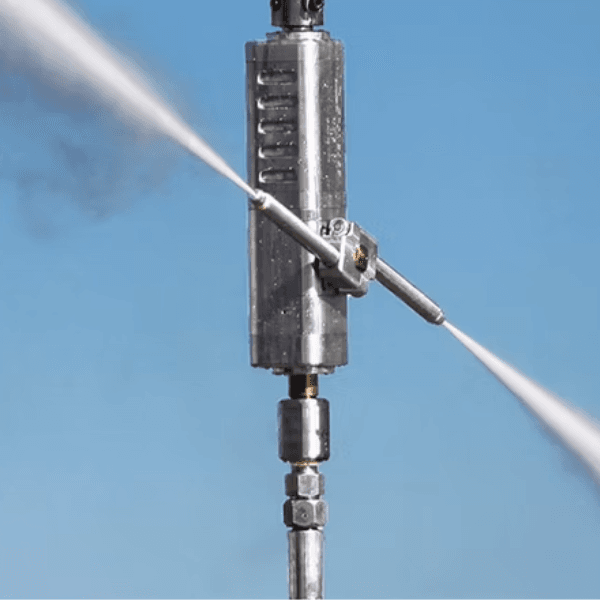
Reactor water jet cleaning systems are specialized high-pressure cleaning solutions designed for industrial reactors in chemical, pharmaceutical, and petrochemical plants. These systems ensure safe, efficient, and residue-free cleaning without causing any damage to reactor walls or internal components.
Why reactor cleaning is difficult
Over time, reactors accumulate scale, polymer deposits, coke, catalyst residues, and other stubborn contaminants that affect performance and yield. Traditional manual cleaning is time-consuming and unsafe. High-pressure water jet cleaning systems offer:
- Thorough residue removal for consistent reactor performance
- Reduced downtime and faster turnaround
- no harsh chemicals
- Safe operation for confined spaces
How reactor water jet cleaning works
Our reactor water jet cleaning systems use ultra-high-pressure water jets (typically 500 bar to 1500 bar or more) to dislodge deposits without damaging reactor surfaces. The system includes:
What the system includes
High-pressure pump unit
Specialized nozzles and rotary jet heads
Flexible lance or automated nozzle positioning system
Remote control for safe operation
Technical Specifications
- Pressure Range500 to 1500 bar (customizable up to 3000 bar)
- Flow Rate20 LPM to 200 LPM
- Power SourceElectric / Diesel
- Automation OptionsManual, Semi-Automatic, Fully Automated
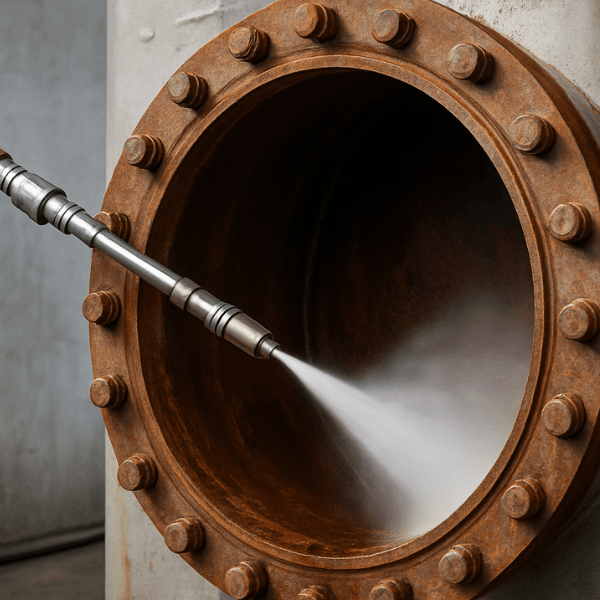
Reactors we clean
Our cleaning systems are widely used in:
-
Chemical Processing Reactorsremoving polymer residues, chemical deposits
-
Pharmaceutical Reactorsthoroughly cleaned internal surfaces
-
Petrochemical Reactorseliminating coke and catalyst build-up
-
Food & Beverage Reactorshygienic and contamination-free cleaning
Advantages over manual cleaning
-
Cost-EffectiveReduces labor and downtime costs
-
Automation AvailableImproves safety in hazardous environments
-
High EfficiencyReduces cleaning cycle time
-
Non-abrasive & Non-chemicalProtects equipment life
Why plants choose Riggers Pumps
We provide custom-designed water jet cleaning systems for reactors with:

- Advanced technology for deep cleaning
- Robust high-pressure pumps and accessories
- On-site installation & training
- Technical support and spares
Selecting pressure and flow for reactor cleaning
The right set-up depends on what is stuck to the reactor walls and how you can get a jet inside. Use these points to narrow it down before you ask for a quote.
Identify the deposit
Soft sludge and polymer films usually clear at the lower end of 500–1500 bar; hard coke, catalyst and scale may need higher pressure, configurable up to 3000 bar.
Balance pressure with flow
Pressure breaks the deposit; flow (20–200 LPM) carries it out. Large reactors with heavy loose debris benefit from more flow.
Choose the tool
Rotary jet heads suit full internal surfaces through a manway; flexible lances suit nozzles, agitators and tight spots.
Decide on automation
Manual for simple jobs, semi-automatic for better control, fully automated positioning for repeat cleans and hazardous areas with less confined-space entry.
Confirm the power source
Electric where plant power is stable; diesel for mobile units or sites without a dependable supply.
Share access details
Reactor diameter and height, manway size, internals and shutdown window help us specify nozzles and hose lengths.
How a Riggers Pumps order works
Three steps from enquiry to a tested machine on your site.
-
Share the job
Tell us the application, the pressure and flow you need (or the surface and dirt you are dealing with), power available and site conditions. Photos help.
-
We size and build
Our engineers match pump, drive, nozzle and accessories to the duty and send a clear technical offer.
-
Tested, delivered, supported
Each unit is pressure-tested before dispatch, and we stay on call for commissioning guidance, spares and service.
Frequently asked questions
Straight answers to what buyers ask us most. Can’t find yours? Ask our team.
What pressure range is suitable for reactor cleaning?
Most industrial reactor deposits are cleaned at 500–1500 bar. For tougher build-up such as hardened coke or catalyst, the system can be configured for higher pressure, up to 3000 bar, depending on the reactor condition and deposit type. Tell us the residue and reactor size and we will suggest a working pressure and flow.
Can water jet cleaning remove polymer deposits from reactors?
Yes. High pressure water jets remove polymer deposits, catalyst residue, coke, scale and other internal build-up without harsh chemicals. Rotary jet heads cover the reactor walls evenly, while lances reach around agitators and nozzles where polymer tends to collect. Share the polymer type and how thick the layer is so we can suggest pressure and head.
Which set-up suits chemical and petrochemical reactors?
A jetting unit with suitable nozzles or rotary heads and remote operation is commonly used, so operators stay outside the vessel while it is cleaned. The exact configuration depends on the residue type, reactor size, access points and shutdown conditions at your plant.
Is an electric or diesel system better for reactor cleaning?
Electric is the better choice inside a plant with a stable power supply, as it runs quietly without exhaust. Diesel suits mobile outdoor use or locations that need independent power, such as contractors moving between sites. Both can be built for the same pressure and flow range.
Should I choose manual, semi-automatic or fully automated cleaning?
Manual lancing suits simpler, occasional jobs. Semi-automatic systems improve operator control and safety. Fully automated nozzle positioning is best for repeat cleaning, hazardous areas and reducing manual entry into confined spaces, and it gives more consistent results between shutdowns. Tell us how often the reactor is cleaned and we will suggest the right level.
Can water jet cleaning damage reactor surfaces?
No, not when the correct pressure, nozzle and operating method are selected. Water jetting is non-abrasive, so it removes deposits without the scratching or wear that mechanical scraping can cause. For lined or coated reactors, tell us the lining type so pressure can be set accordingly.
Can water jetting reduce reactor shutdown time?
Yes. Water jetting is generally faster than manual cleaning and, with automated heads, can run while crews prepare other work. This helps shorten turnaround during maintenance shutdowns and returns the reactor to production sooner. Planning hoses, heads and pump position before the shutdown starts saves further time on the day.
What is a reactor or tank cleaning system used for?
It cleans internal surfaces of reactors, vessels and tanks in chemical, pharma, petrochemical, food and process plants. It removes residue, scale, sludge and polymer build-up that reduce yield, affect heat transfer or compromise hygiene. Pressure, flow and cleaning head are chosen to suit the deposit and vessel size, so share both when you enquire.
What details should I send for a quote?
Send the deposit type, reactor size and manway dimensions, preferred pressure if known, power source (electric or diesel), automation level and any hazardous-area or safety requirements. Photos of the deposit help. With this we can recommend the pump, flow and cleaning head.
Related pumps and applications
Talk to an engineer
Plan your next reactor shutdown clean
Tell us the deposit, reactor size, access and power source. We will propose a jetting unit and cleaning head to suit.
- Call or WhatsApp+91 94870 87778
- Emailconnect@riggerspumps.com
- WorksAmbattur Industrial Estate, Chennai 600 098