Heat exchanger cleaning
Water jetting systems for heat exchanger cleaning
Remove scale, rust and fouling from shell and tube, plate and spiral exchangers with rotary tube nozzles, flexible lances and controlled pressure, so heat transfer recovers without chemicals or abrasives.
- 500–2800 bar
- 15–200 LPM
- Shell and tube, plate, spiral
- Manual to fully automated
- Pressure-tested before dispatch
- Spares and accessories in Chennai
- Supplied across India and the Gulf
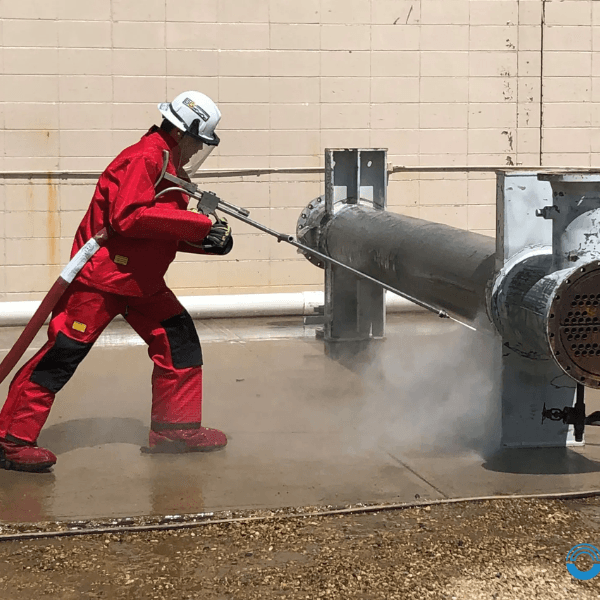
Water jetting systems for heat exchanger cleaning provide a highly effective and eco-friendly solution to remove scale, fouling, and debris that impair heat transfer efficiency. Whether in chemical plants, petrochemical refineries, or power generation facilities, our water jetting systems help heat exchangers return to efficient operation, improving energy efficiency and reducing operational costs.
Utilizing high-pressure water jets, these systems can clean heat exchangers quickly, without the need for harsh chemicals or abrasives, protecting equipment and ensuring minimal downtime.
How heat exchanger jetting works
Our high-pressure water jetting systems deliver pressurized water (ranging from 500 bar to 2800 bar) through specially designed nozzles. The systems are equipped with various components to ensure effective cleaning:
System components
High-Pressure Pump: Delivers the required pressure for effective cleaning
Rotary Nozzles: Ensure uniform coverage and optimal cleaning of heat exchanger tubes
Flexible Lances & Hoses: Reach deep into the tubes, effectively cleaning difficult-to-access areas
Automated Control Systems: Allow precise regulation of pressure and flow for different cleaning applications
Rotary Tube Cleaning Technology: Spins nozzles inside the tubes, breaking apart deposits and removing them
Technical Specifications
- Pressure Range: 500 – 2800 bar (customizable for different heat exchanger types)
- Flow Rate: 15 – 200 LPM
- Power Source: Diesel, Electric, or Hydraulic
- Nozzle Type: Rotary nozzles for deep cleaning and uniform coverage
- Accessories: Flexible lances, hose reels, surface cleaning nozzles
- Control Options: Manual, semi-automatic, or fully automated for safe operation
- Mounting: Skid or trailer-mounted for portability
Industries we serve
-
Chemical Processing PlantsRemoving scale, fouling, and debris from heat exchangers
-
Petrochemical RefineriesCleaning heat exchangers used in distillation and other processes
-
Power PlantsDescaling and cleaning boilers, condensers, and heat exchangers
-
Food & Beverage IndustryEnsuring hygienic cleaning of heat exchangers used in pasteurization, refrigeration, and sterilization
-
Pharmaceutical PlantsCleaning heat exchangers to maintain hygiene and efficiency
Advantages over chemical and manual cleaning
-
Efficient PerformanceQuickly and effectively removes scale, rust, and other residues that impede heat transfer
-
Eco-Friendly SolutionNo chemicals are used, making it safer for the environment and workers
-
Cost SavingsReduces maintenance costs by preventing damage to heat exchanger surfaces
-
Low DowntimeCleaning is typically faster than traditional manual methods
-
Safe and Non-AbrasivePrevents equipment damage, extending the lifespan of heat exchangers
Why choose Riggers Pumps for exchanger cleaning
Our water jetting systems are custom-designed to offer high-efficiency cleaning for various types of heat exchangers, ensuring that your equipment runs smoothly. Benefits include:

-
VersatilitySuitable for common heat exchanger types, including plate, shell, tube, and spiral types
-
Customizable SolutionsTailored to meet your specific pressure, flow, and nozzle requirements
-
Reliable & DurableBuilt with high-quality materials to withstand the rigors of industrial cleaning
-
Eco-Friendly DesignNo harmful chemicals or abrasive materials, reducing your environmental footprint
-
Expert SupportWe offer installation, training, and ongoing support to ensure the optimal performance of your system
Cleaning approach by heat exchanger type
Each exchanger design fouls differently and gives the jet different access. Tell us which type you have so we can choose the right tooling.
Shell and tube: tube side
Rotary tube nozzles on flexible lances travel inside each tube, breaking deposits and flushing them out; pressure is set by tube ID and fouling.
Shell and tube: bundle exterior
Pulled bundles are cleaned from outside with lances and surface nozzles to reach between tubes and baffles.
Plate exchangers
Opened plate packs are cleaned plate by plate with controlled pressure to remove scale without harming gaskets or plate surfaces.
Spiral exchangers
Opened channels are jetted along the spiral path; flow matters to carry loosened deposit out.
Control level
Manual lancing for small jobs, semi-automatic or fully automated control for large bundles and safer, repeatable cleaning.
What to share
Exchanger type, tube ID and length or plate size, number of tubes, deposit type and the shutdown time available.
How a Riggers Pumps order works
Three steps from enquiry to a tested machine on your site.
-
Share the job
Tell us the application, the pressure and flow you need (or the surface and dirt you are dealing with), power available and site conditions. Photos help.
-
We size and build
Our engineers match pump, drive, nozzle and accessories to the duty and send a clear technical offer.
-
Tested, delivered, supported
Each unit is pressure-tested before dispatch, and we stay on call for commissioning guidance, spares and service.
Frequently asked questions
Straight answers to what buyers ask us most. Can’t find yours? Ask our team.
What pressure is used for heat exchanger cleaning?
Heat exchanger jetting typically uses 500–2800 bar, depending on the fouling level and the type of exchanger. Light fouling clears at lower pressures, while hard scale needs more. Our systems can be customised within this range for your exchanger types.
How does water jetting improve heat exchanger performance?
Scale, fouling and debris on tubes and plates act as insulation and restrict flow. Water jetting removes them, which restores heat transfer and reduces pressure drop, improving overall system performance and energy efficiency. Regular jetting before fouling becomes heavy usually takes less time and lower pressure.
Can water jetting clean all types of heat exchangers?
It can clean the common types: shell and tube, plate, spiral and others. The tooling differs: rotary nozzles and lances for tubes, controlled-pressure surface work for plates and spiral channels. Tell us the type and we will suggest nozzles and pressure.
Is water jetting safe for exchanger tubes and plates?
Yes. Water jetting is non-abrasive, so it removes deposits without the wear that brushes, scrapers or grit can cause. Pressure and nozzle should be matched to the tube material and plate thickness to avoid damage. Tell us the tube material and plate type so we can set pressure accordingly.
Is chemical cleaning still needed?
In many cases no. High pressure water removes scale, rust and fouling without harsh chemicals, which is safer for workers and the environment and avoids disposal of spent chemical. Some very specific deposits may still need a process-specific approach, so describe your deposit when you enquire.
Should I choose manual, semi-automatic or automated control?
Manual lancing suits small exchangers and occasional cleaning. Semi-automatic control improves operator control and safety. Fully automated systems suit large bundles and frequent cleaning, giving consistent results while keeping operators away from the jet. Share the number of exchangers and how often they are cleaned so we can suggest the right level.
Which power source should I choose?
Electric suits fixed workshops and plants with reliable power. Diesel suits trailer units that move between plants or work outdoors. Hydraulic drive is available where hydraulic power is already part of the site. Tell us where the cleaning will be done and we will recommend the drive and mounting.
What details should I send for a quote?
Send exchanger type, tube ID, length and count (or plate size), tube material, deposit type, preferred pressure and flow, power source, mounting (skid or trailer) and control level. Photos of the fouling help. With these details we can size the pump and tooling in one proposal.
Related pumps and applications
Talk to an engineer
Get the right set-up for your exchangers
Share exchanger type, tube size and count, deposit and power source. We will recommend pressure, flow and tooling.
- Call or WhatsApp+91 94870 87778
- Emailconnect@riggerspumps.com
- WorksAmbattur Industrial Estate, Chennai 600 098