Water Jetting Systems for Decontamination | Safe, Efficient, and Eco-Friendly Cleaning Solutions
Water jetting systems for decontamination provide an effective, high-pressure solution to remove contaminants, including hazardous substances, chemical residues, oil, grease, and biological contaminants from industrial surfaces and equipment. These systems use high-pressure water jets (up to 2800 bar) to thoroughly clean and decontaminate a variety of surfaces, ensuring they meet safety standards and maintain operational efficiency.
Our water jetting systems are designed for industries requiring safe, eco-friendly, and cost-effective decontamination solutions, including chemical plants, nuclear facilities, food processing plants, and pharmaceutical industries.
How Water Jetting Systems Work for Decontamination
Water jetting systems operate by using high-pressure water to dislodge and remove contaminants. The components of a water jetting system for decontamination include:
How It Works
High-Pressure Pump: Provides the necessary pressure (typically 500 bar to 2800 bar) for cleaning
Rotary Nozzles: Spin to cover a larger area and ensure uniform cleaning across the surface
Flexible Lances & Hoses: Reach deep and hard-to-access areas, including tanks, pipes, and industrial reactors
Control System: Allows precise adjustment of water pressure, flow rate, and nozzle movement for different types of contamination
Water Recovery System (Optional): Collects, filters, and recycles water, reducing waste and ensuring compliance with environmental regulations
Technical Specifications
- Pressure Range: 500 – 2800 bar (customizable based on decontamination requirements)
- Flow Rate: 15 – 200 LPM
- Power Source: Diesel, Electric, or Hydraulic-powered
- Pump Type: Triplex Plunger Pumps, Axial Piston Pumps, or Centrifugal Pumps
- Nozzle Types: Rotary nozzles, fixed nozzles, and specialized nozzles for various decontamination tasks
- Mounting Options: Skid, Trailer, or Vehicle-mounted for mobility and portability
- Water Recovery: Optional systems to collect, filter, and reuse water for sustainable cleaning
- Control Systems: Manual or automated control for precise regulation of water pressure and flow
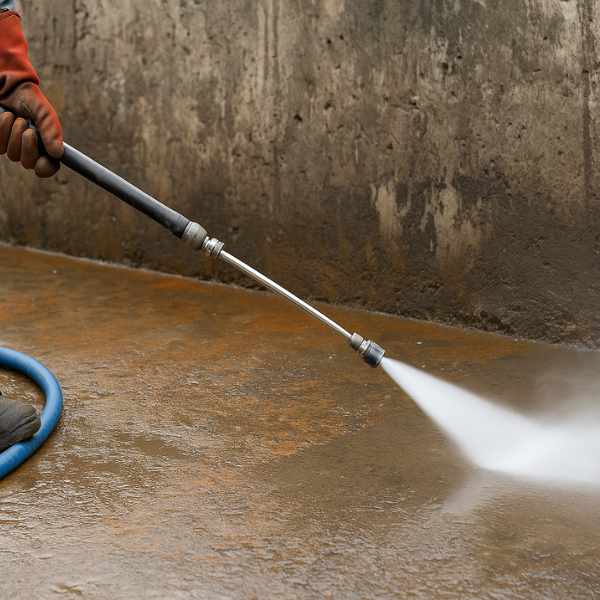
Applications of Water Jetting Systems for Decontamination
Water jetting systems are widely used in industries where cleaning and decontamination are critical for safety, performance, and compliance:
Chemical Plants: Removes chemical residues, solvents, and oils from reactors, pipes, and equipment
Nuclear Facilities: Safely decontaminates reactors, piping systems, and storage tanks from radioactive materials
Pharmaceutical Industry: Cleans production lines, tanks, and equipment used in drug manufacturing to meet health and safety standards
Food Processing Plants: Removes food residues, oils, and contaminants from surfaces and equipment, ensuring hygienic conditions
Oil & Gas Industry: Cleans tanks, pipelines, and rigs, removing oil spills, grease, and other pollutants
Industrial Manufacturing: Removes dust, scale, and other contaminants from equipment in factories and production facilities
Advantages of Using Water Jetting Systems for Decontamination
Non-Damaging: Cleans without causing harm to the surfaces or equipment being treated
Eco-Friendly & Sustainable: Uses water without the need for chemicals or abrasives, making it an environmentally safe solution
Efficient Removal of Contaminants: Quickly removes hazardous substances, ensuring compliance with health and safety regulations
Improved Worker Safety: Reduces human exposure to toxic chemicals and contaminants, improving overall safety
Cost-Effective: Reduces labor and material costs by minimizing the need for hazardous chemicals and abrasives
Customizable Solutions: Tailored to meet specific decontamination needs, from industrial machinery to nuclear reactors
Why Choose Our Water Jetting Systems for Decontamination?
Our water jetting systems are designed for maximum performance and efficiency in decontamination tasks across various industries. Here’s why you should choose our systems:
High Durability: Built with corrosion-resistant materials to withstand the harsh conditions in chemical, nuclear, and industrial environments
Energy Efficient: Optimized systems that provide effective cleaning while minimizing power consumption
Safe & Non-Damaging: Non-abrasive cleaning ensures no damage to surfaces or machinery
Portability & Flexibility: Available in portable skid, trailer, or vehicle-mounted options for ease of use in various environments
Full Support: We provide installation, training, and after-sales service to ensure optimal performance of the system
FAQs – Water Jetting Systems for Decontamination
Which water jetting system is suitable for decontamination cleaning?
A water jetting system with the correct pressure, flow rate, nozzle setup, and recovery arrangement is suitable for decontamination cleaning of industrial surfaces, equipment, tanks, pipes, and processing areas.
What contaminants can be removed with water jetting systems?
Water jetting systems can remove oil, grease, chemical residue, sludge, dust, scale, and other surface contamination depending on the application and cleaning setup.
Can water jetting remove chemical residue and oil from equipment?
Yes. Water jetting systems are used to remove chemical residue, oils, grease, and process contamination from industrial equipment and surfaces when the correct pressure and nozzle arrangement are selected.
What pressure range is suitable for decontamination cleaning?
The pressure range depends on the contaminant type, surface condition, and cleaning requirement. Lower pressure is suitable for lighter contamination, while higher pressure is used for harder deposits and tougher industrial cleaning.
Can water jetting damage sensitive equipment?
When the correct pressure, nozzle, spray distance, and cleaning method are selected, water jetting can clean effectively without unnecessary surface damage. The setup should always match the material and contamination level.
Which is better for decontamination: electric or diesel water jetting system?
An electric system is suitable for fixed plant areas where stable power is available. A diesel system is better for outdoor, remote, or mobile decontamination work where independent operation is needed.
Is a water recovery system needed for decontamination cleaning?
In many decontamination applications, a water recovery system is useful for collecting, filtering, and managing contaminated water more safely, especially where environmental compliance is important.
Which industries use water jetting systems for decontamination?
Water jetting systems are used in chemical plants, pharmaceutical facilities, food processing plants, oil and gas operations, industrial manufacturing, and other sites where contamination removal is required.
Can water jetting be used for tanks, pipes, and reactors?
Yes. Water jetting systems can be used for cleaning tanks, pipes, reactors, and other process equipment when the correct hose, lance, nozzle, and safety controls are selected.
How do I choose the right water jetting system for decontamination?
Choose the system based on the contaminant type, pressure requirement, flow rate, power source, mounting type, recovery requirement, and the surface or equipment being cleaned.