In this article
- 1. Deep Penetration for Effective Cleaning
- 2. Surface Cleaning and Preparation
- 3. Non-Abrasive and Eco-Friendly Approach
- 4. Effective Contaminant Removal from Cracks and Pores
- 5. Enhancing Structural Durability
- 6. Precision Cleaning for Targeted Treatment
- 7. Optimal Surface Preparation for Repairs
- 8. Reduced Dust and Airborne Debris
- 9. Cost-Effective and Time-Saving Solution
- Industries Benefiting from High-Pressure Pump Systems:
Understanding the Impact of Chloride Contamination in Concrete
Concrete structures exposed to harsh environmental conditions, such as marine settings, de-icing salts, or industrial chemicals, often face a major challenge—chloride infiltration. Chlorides seep into the porous concrete and trigger the corrosion of steel reinforcement, leading to structural damage, cracking, and reduced lifespan.
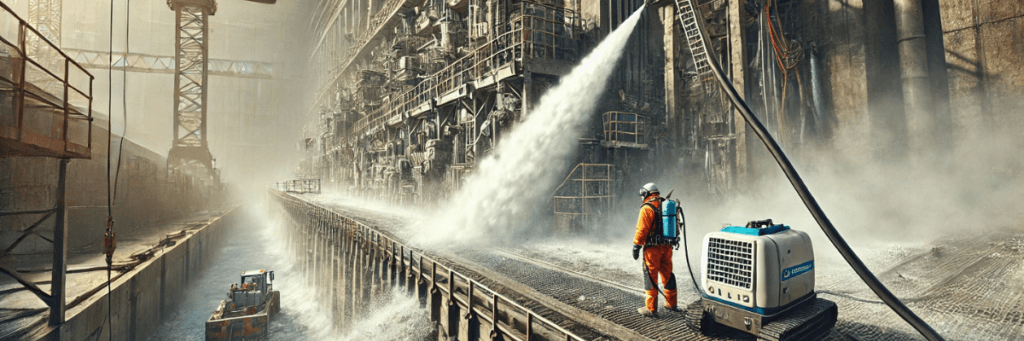
To combat this, effective chloride removal is essential to maintain the integrity of structures such as bridges, highways, parking decks, and marine infrastructures. One of the most efficient, non-invasive, and environmentally responsible solutions is high-pressure water jetting powered by high-pressure pumps.
How High-Pressure Pumps Aid in Chloride Removal
1. Deep Penetration for Effective Cleaning
High-pressure pumps generate intense water jets with pressures ranging from 5,000 psi to over 40,000 psi, allowing water to penetrate deep into the concrete’s porous structure. This high-impact water jet flushes out embedded chlorides and other contaminants, significantly reducing their concentration without harming the structural integrity of the concrete.
2. Surface Cleaning and Preparation
Many chlorides settle on the concrete’s surface due to exposure to de-icing salts or seawater. High-pressure water jetting effectively removes these contaminants while preparing the surface for repair work or protective treatments like sealants and corrosion inhibitors. By eliminating chloride-laden top layers, this method enhances the adhesion and performance of protective coatings.
3. Non-Abrasive and Eco-Friendly Approach
Unlike mechanical methods like sandblasting or grinding, which can degrade the concrete surface, high-pressure water jetting is non-abrasive. It safely removes chlorides while preserving the structural integrity of the material. Furthermore, this technique eliminates the need for harsh chemicals, making it an environmentally sustainable choice that reduces hazardous waste and disposal costs.
4. Effective Contaminant Removal from Cracks and Pores
Concrete naturally develops cracks and micro-pores over time, creating pathways for chloride penetration. Traditional cleaning methods often fail to reach these areas. High-pressure pumps deliver powerful water jets capable of flushing out trapped chlorides, preventing further corrosion of reinforcement bars and ensuring a longer-lasting structure.
5. Enhancing Structural Durability
Corrosion of steel reinforcement bars (rebar) is one of the leading causes of concrete failure. When chlorides accelerate corrosion, the expanding rust weakens the concrete, causing cracks and spalling. Regular chloride removal through high-pressure water jetting significantly reduces this risk, thereby extending the life of concrete structures and reducing long-term maintenance costs.
6. Precision Cleaning for Targeted Treatment
High-pressure pumps offer precise control, allowing operators to focus on specific areas with the highest chloride contamination. This targeted approach minimizes unnecessary removal of unaffected concrete, making it a cost-effective solution for large-scale maintenance projects such as bridges, tunnels, and industrial plants.
7. Optimal Surface Preparation for Repairs
Before applying repair materials such as coatings, corrosion inhibitors, or overlays, it is critical to ensure that the surface is free from chlorides and contaminants. High-pressure water jetting provides a thoroughly cleaned surface, allowing for better adhesion and effectiveness of protective treatments. This improves the quality and longevity of subsequent restoration work.
8. Reduced Dust and Airborne Debris
Traditional cleaning techniques like mechanical grinding and sandblasting generate a significant amount of dust and debris, which can pose health risks and require additional containment measures. High-pressure water jetting minimizes airborne pollutants, making it an ideal choice for environments where dust control is essential, such as urban construction sites or enclosed industrial facilities.
9. Cost-Effective and Time-Saving Solution
Compared to labor-intensive methods like manual chiseling or chemical treatments, high-pressure water jetting is faster and more efficient. This reduces downtime for the structure being cleaned and lowers overall labor costs. Additionally, by eliminating the need for chemical cleaners, operational costs are further reduced, making it an economical choice for large-scale chloride remediation projects.
Industries Benefiting from High-Pressure Pump Systems:
- Bridges & Highways: Road de-icing salts lead to chloride accumulation in concrete structures, increasing the risk of rebar corrosion. High-pressure cleaning effectively removes these salts and prepares surfaces for protective coatings.
- Marine Structures: Piers, docks, and seawalls are continually exposed to saltwater, making them highly susceptible to chloride contamination. Regular high-pressure cleaning extends their durability and minimizes maintenance costs.
- Parking Garages: Road salts carried by vehicles often penetrate concrete parking structures, causing deterioration. High-pressure jetting helps prevent long-term damage and preserves structural integrity.
- Industrial Facilities: Chemical plants and factories frequently deal with chloride buildup on concrete floors and containment areas. High-pressure cleaning ensures a safe and uncontaminated working environment.
Repairing chloride-damaged concrete? Ask Riggers Pumps about water jetting systems for concrete surface profiling.
Frequently asked questions
Why is chloride harmful to concrete structures?
Chlorides from marine environments, de-icing salts or industrial chemicals seep into porous concrete and reach the steel reinforcement. They trigger corrosion of the steel, which expands and causes cracking, spalling and a shorter structural lifespan. Sharing details of the deposit type, access and equipment size with your supplier helps in selecting the right pump, hoses and nozzles.
How do high-pressure pumps help with chloride-contaminated concrete?
High-pressure water jetting cleans contaminated surfaces, flushes cracks and pores, and can remove deteriorated concrete to expose sound material. This prepares the structure for repair and protective treatments so that the repairs bond well and last longer. Planning the cleaning around scheduled shutdowns also helps keep production losses to a minimum.
Is high-pressure water jetting better than mechanical methods for concrete?
It produces less dust and vibration than many mechanical methods and can target specific areas precisely. It also avoids micro-cracking that some impact tools can cause. The right method depends on the depth of contamination and the repair specification. Trained operators, proper protective equipment and rated accessories remain essential for safe work.