Paint stripping
Water jetting systems for paint and coating removal
Strip multiple paint layers, coatings and rust from steel structures, concrete, tanks, pipes and machinery without grit or chemical strippers, leaving a clean base for the next coat.
- 500–2800 bar
- 15–200 LPM
- No grit or chemical strippers
- Manual to fully automated
- Pressure-tested before dispatch
- Spares and accessories in Chennai
- Supplied across India and the Gulf
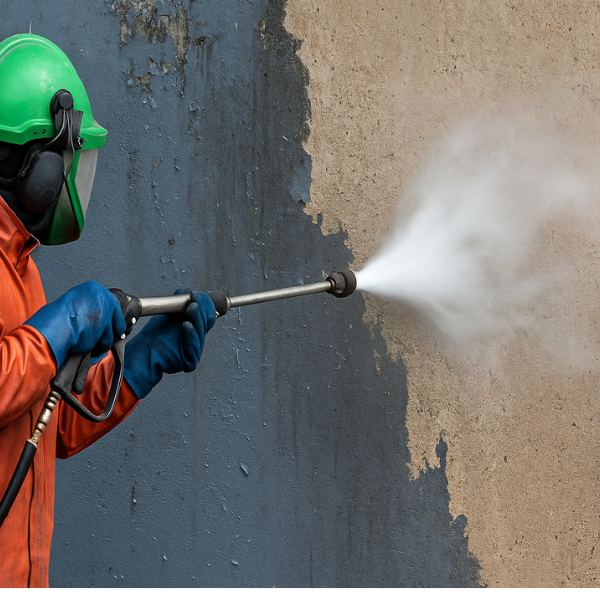
Water jetting systems for paint removal provide a high-pressure, non-abrasive solution for safely and efficiently removing paint, coatings, and other surface residues from a variety of substrates. On metal and concrete, water jetting strips old paint, rust, and contaminants without abrasive damage to the underlying surface when pressure and nozzles are set correctly.
Our water jetting systems offer a cost-effective, eco-friendly, and safe alternative to traditional methods like sandblasting or chemical stripping. This technology is widely used in industries such as marine, automotive, construction, and manufacturing, where efficient paint removal is critical for equipment maintenance and surface preparation.
How water jet paint removal works
Water jetting systems use high-pressure water (ranging from 500 bar to 2800 bar) to remove paint and other coatings. The main components of these systems include:
System components
High-Pressure Pump: Delivers water at high pressure for effective paint removal
Nozzles: Rotary or fixed nozzles that direct the water stream to break apart and wash away paint layers
Flexible Hoses & Lances: Allow access to difficult-to-reach areas, ensuring that even intricate parts can be cleaned effectively
Control System: Regulates water pressure and flow rate to optimize cleaning for different materials and types of coatings
Water Recovery System (Optional): Collects and filters used water for reuse, minimizing waste and helping contain paint residue
Technical Specifications
- Pressure Range: 500 – 2800 bar (customizable for different coatings and substrates)
- Flow Rate: 15 – 200 LPM
- Power Source: Diesel, Electric, or Hydraulic
- Nozzle Type: Rotary nozzles for deep cleaning and uniform coverage
- Accessories: Flexible lances, hose reels, surface cleaning nozzles
- Control Options: Manual, semi-automatic, or fully automated for safe operation
- Mounting: Skid or trailer-mounted for portability
Paint removal jobs by industry
-
Marine IndustryRemoves old paint, marine growth, and rust from ship hulls, ensuring improved fuel efficiency and performance
-
Automotive IndustryPrepares vehicle surfaces for refinishing by removing old paint, rust, and coatings from car bodies, wheels, and chassis
-
Construction & InfrastructureStrips paint from concrete, steel beams, and bridges, ensuring surfaces are ready for new coatings or repairs
-
Industrial Equipment MaintenanceRemoves paint and contaminants from machinery, tanks, and pipes to prepare for refinishing or to ensure equipment longevity
-
Aerospace IndustryRemoves old paint and coatings from aircraft ground equipment and components as part of maintenance
Advantages over sandblasting and chemical strippers
-
Non-AbrasiveRemoves coatings without grit erosion of the substrate
-
Eco-FriendlyNo chemicals or abrasives are required, making it an environmentally safe solution
-
EfficientRemoves even multiple layers of paint in a short amount of time, reducing downtime
-
Cost-EffectiveLowers costs by eliminating the need for chemicals, sandblasting equipment, or excessive manual labor
-
VersatileSuitable for metal, concrete, and other robust industrial surfaces
-
Minimal Health RisksReduces worker exposure to toxic chemicals and harmful dust particles
-
Improved Surface PreparationPrepares surfaces for refinishing, painting, or coatings by ensuring a clean, smooth base
Why choose Riggers Pumps for paint removal
Our water jetting systems are designed for high performance and reliable results in paint removal tasks across industries. Here’s why they stand out:

-
High EfficiencyHigh-pressure systems quickly remove paint, contaminants, and coatings from surfaces, reducing downtime
-
DurabilityConstructed with high-quality, corrosion-resistant materials to withstand challenging environments
-
Customizable SolutionsTailored systems based on specific paint removal needs, including pressure, flow, and nozzle configuration
-
Portability & FlexibilitySkid, trailer, or vehicle-mounted units for easy transport and setup at various job sites
-
Comprehensive SupportInstallation, training, and after-sales service to ensure optimal system performance and customer satisfaction
Selecting pressure and flow for paint removal
How much pressure you need depends on the coating, how many layers there are and what is underneath. Use these guidelines to brief us.
Light coatings and loose paint
Flaking or single-layer paint usually comes off at the lower end of 500–2800 bar with rotary nozzles.
Thick, multi-layer or hard coatings
Epoxies, multiple layers and paint with rust need higher pressure and fixed or specialty nozzles.
Substrate
Steel and concrete tolerate high pressure; thin sheet, plastic and wood need much lower pressure or a different method.
Large areas
Surface cleaning nozzles, hose reels and higher flow speed up decks, tanks and floors.
Paint residue
Stripped paint ends up in the wash water; specify the optional recovery system where it must be collected.
Automation
Semi-automatic or fully automated control gives a more even finish on large surfaces and keeps operators back from the jet.
How a Riggers Pumps order works
Three steps from enquiry to a tested machine on your site.
-
Share the job
Tell us the application, the pressure and flow you need (or the surface and dirt you are dealing with), power available and site conditions. Photos help.
-
We size and build
Our engineers match pump, drive, nozzle and accessories to the duty and send a clear technical offer.
-
Tested, delivered, supported
Each unit is pressure-tested before dispatch, and we stay on call for commissioning guidance, spares and service.
Frequently asked questions
Straight answers to what buyers ask us most. Can’t find yours? Ask our team.
Which water jetting system suits paint removal?
A system with the correct pressure, flow and nozzle set-up for your coating and surface. The right choice depends on coating type and thickness, the substrate and how clean the surface must be for the next coat. Share photos and coating details for a recommendation.
What pressure range is suitable for paint removal?
It depends on the surface, number of layers and coating hardness. Lighter coatings come off at lower pressures; thick paint, rust and hard coatings need higher pressure, up to 2800 bar. Start low and increase until the coating lifts cleanly.
Can water jetting remove old paint and rust together?
Yes. With the correct pressure and nozzle, water jetting removes old paint, rust and surface contaminants in one pass, which is common in surface preparation for steel structures, tanks and ship hulls. Share photos of the coating and rust so we can suggest pressure and nozzles.
Can water jetting damage the base surface?
Steel and concrete are not abraded the way grit blasting abrades them, provided pressure, nozzle and spray distance suit the material and coating thickness. Thin sheet, plastics and wood can be damaged at industrial jetting pressures, so they need much gentler settings.
Is water jetting better than sandblasting for paint removal?
Water jetting is often preferred where a non-abrasive method is needed, where dust must be reduced and where spent grit is hard to contain. The best method still depends on the surface, coating, finish required and site conditions. Tell us the job and we will advise.
Which industries use water jetting for paint removal?
Marine, automotive, construction and infrastructure, manufacturing, aerospace support and industrial maintenance all use water jetting to strip paint from hulls, steel beams, bridges, concrete, machinery, tanks and pipes. The right pressure and nozzles differ by industry and surface, so tell us your typical jobs. We will then propose a set-up that covers them.
Can water jetting prepare surfaces for repainting?
Yes. It removes old paint, loose material, rust and contaminants and gives a clean base for the next finish. Allow the surface to dry and follow the coating maker's surface requirements before recoating. Trial a small area first to confirm the finish.
Electric or diesel for paint removal work?
Electric suits fixed workshops and plant areas with stable power. Diesel suits outdoor, mobile or remote work such as bridges, tanks on site and ship hulls in dock. Both can be supplied on skid or trailer mounting. Tell us where you work most often and we will recommend the drive.
What should I send for a quote?
Tell us the substrate, coating type and number of layers, area to strip, target surface finish, whether paint residue must be collected, power source and skid or trailer mounting. Photos of the existing coating and a rough area help us size pressure, flow and nozzles in one proposal.
Related pumps and applications
Talk to an engineer
Strip paint without grit or chemicals
Share the substrate, coating, area and site conditions. We will recommend pressure, flow and nozzles for your job.
- Call or WhatsApp+91 94870 87778
- Emailconnect@riggerspumps.com
- WorksAmbattur Industrial Estate, Chennai 600 098